Inform
Make complex policy and regional developments clear, sourced, and useful.
Welcome to the USCSN public platform. Select your preferred language to continue.
Bienvenue sur la plateforme publique de l’USCSN. Sélectionnez votre langue pour continuer.
Your selection will be remembered. · Votre choix sera mémorisé.
USCSN brings credible information, diaspora expertise, and strategic advocacy into the conversations shaping U.S.–DRC relations.
US-Congo Strategic Network is a nonpartisan advocacy and policy organization working to deepen cooperation between the United States and the Democratic Republic of the Congo.
We turn research into accessible public information, connect professionals and communities, and help decision-makers understand why peace, accountable investment, and a durable U.S.–DRC partnership matter.
Learn how we work →Make complex policy and regional developments clear, sourced, and useful.
Bring diaspora expertise and Congolese perspectives closer to U.S. institutions.
Translate public concern into focused, responsible, and achievable policy action.
Professionals committed to strengthening U.S.–DRC relations through policy, diplomacy, responsible advocacy, and institutional leadership.
Learn why U.S. engagement matters, then build a clear message to the policymakers who can act.
Join researchers, professionals, students, community leaders, and members of the Congolese diaspora working to strengthen U.S.–DRC relations and elevate informed, responsible advocacy.
About USCSN
USCSN brings policy, diplomacy, research, and civic engagement together to strengthen a relationship with consequences for peace, prosperity, and global security.
Who we are
USCSN is a nonpartisan policy and advocacy network dedicated to advancing constructive, long-term relations between the United States and the Democratic Republic of Congo.
We translate complex developments into clear analysis, connect communities with decision-makers, and create practical opportunities for informed civic participation.
Our mission
Our vision
What we focus on
Our work is intentionally focused. Each area reinforces the others and turns information into meaningful engagement.
We organize official documents, monitor developments, and produce accessible policy analysis grounded in evidence.
We support informed dialogue among policymakers, professionals, community leaders, and institutions in both countries.
We equip citizens and the diaspora with practical tools to communicate priorities and participate responsibly in public policy.
How we work
USCSN combines institutional research with public education and direct civic engagement. The goal is not simply to describe problems, but to help people understand them and participate in solutions.
Visit the Policy Library →Strategic priorities
Be part of the network
Build a focused advocacy letter, review it instantly, and submit a clear request to policymakers.
Submit an advocacy request related to legislation, sanctions, hearings, civilian protection, elections, trade, or U.S.–DRC diplomacy.
Select a filing reason to generate your letter…
The official contact form opens in a new tab. You will paste and send the letter there; USCSN does not submit it to Congress for you.
The Democratic Republic of the Congo sits at the intersection of human security, global supply chains, regional stability, and American strategic interests. Evidence should lead to policy—and informed citizens can help move that policy.
These indicators are drawn from official humanitarian, geological, and diplomatic sources. They show why Congo is not a distant issue—it is a humanitarian emergency and a strategic priority.
People estimated to require humanitarian assistance in the DRC during 2026.
Source: UN OCHA ↗People prioritized for humanitarian response because available funding cannot reach everyone in need.
Source: UN OCHA ↗Internally displaced people reported across the country in the 2026 humanitarian dashboard.
Source: UN OCHA ↗Share of world mined cobalt production supplied by the DRC in the latest USGS yearbook assessment.
Source: U.S. Geological Survey ↗U.S. policy can influence accountability, regional diplomacy, humanitarian assistance, responsible investment, and the security of critical-mineral supply chains.
Persistent armed conflict threatens civilians, weakens state authority, destabilizes the Great Lakes region, and creates space for illicit economic networks.
Millions face displacement, food insecurity, interrupted education, and reduced access to health care. Diplomatic pressure and sustained assistance save lives.
Cobalt, copper, and other resources are essential to energy, defense, electronics, and advanced manufacturing. Transparent partnerships strengthen resilient supply chains.
A stable, sovereign DRC supports regional security, reduces strategic dependency, and expands opportunities for mutually beneficial American engagement.
Responsible investment in mining, energy, agriculture, transport, and technology can create jobs in Congo while opening credible partnerships for U.S. companies.
Congressional oversight, targeted sanctions, anti-corruption safeguards, and support for credible institutions can reinforce the rule of law.
Behind every resolution, sanction, agreement, and investment strategy are communities, strategic assets, and institutions whose futures are connected.
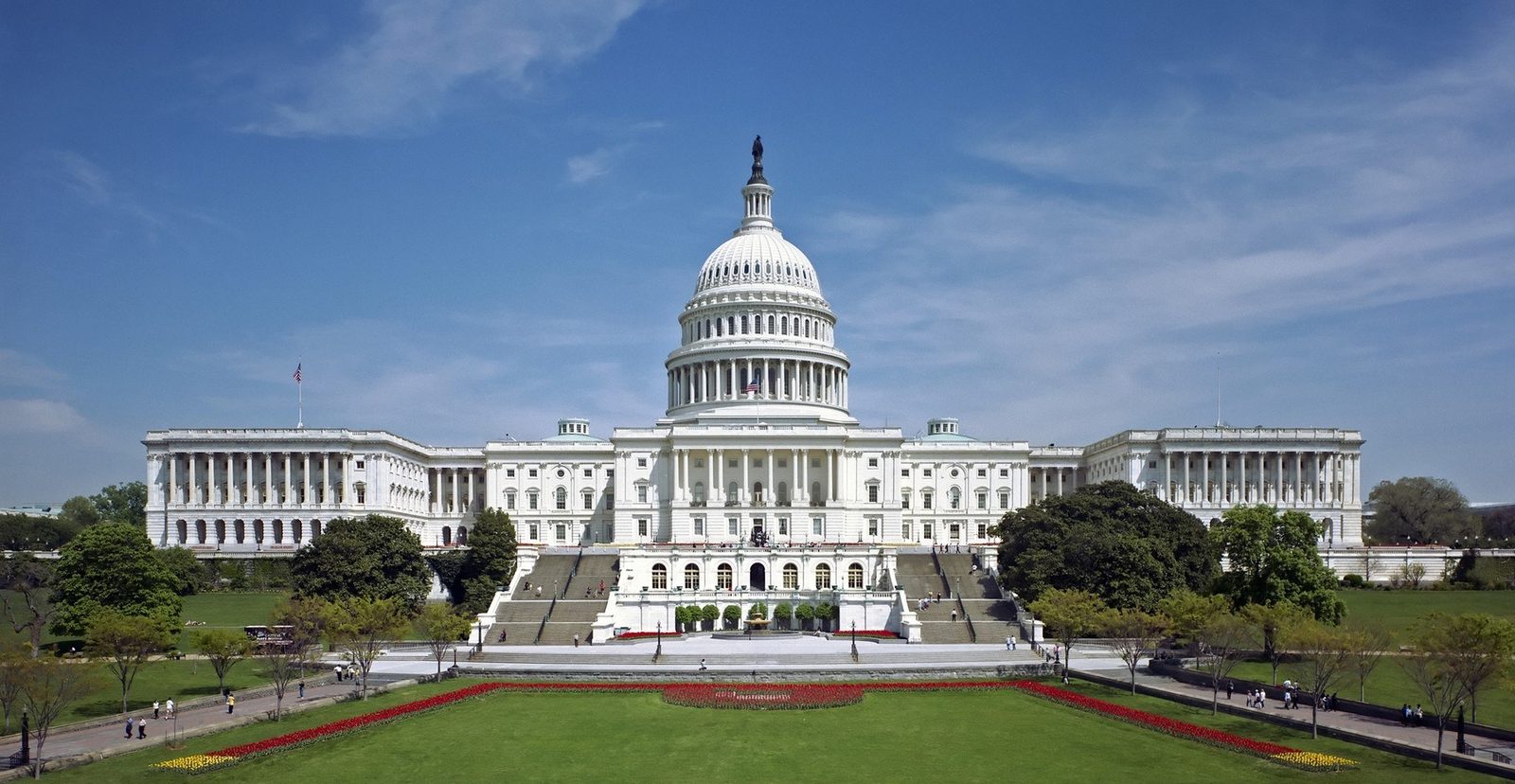
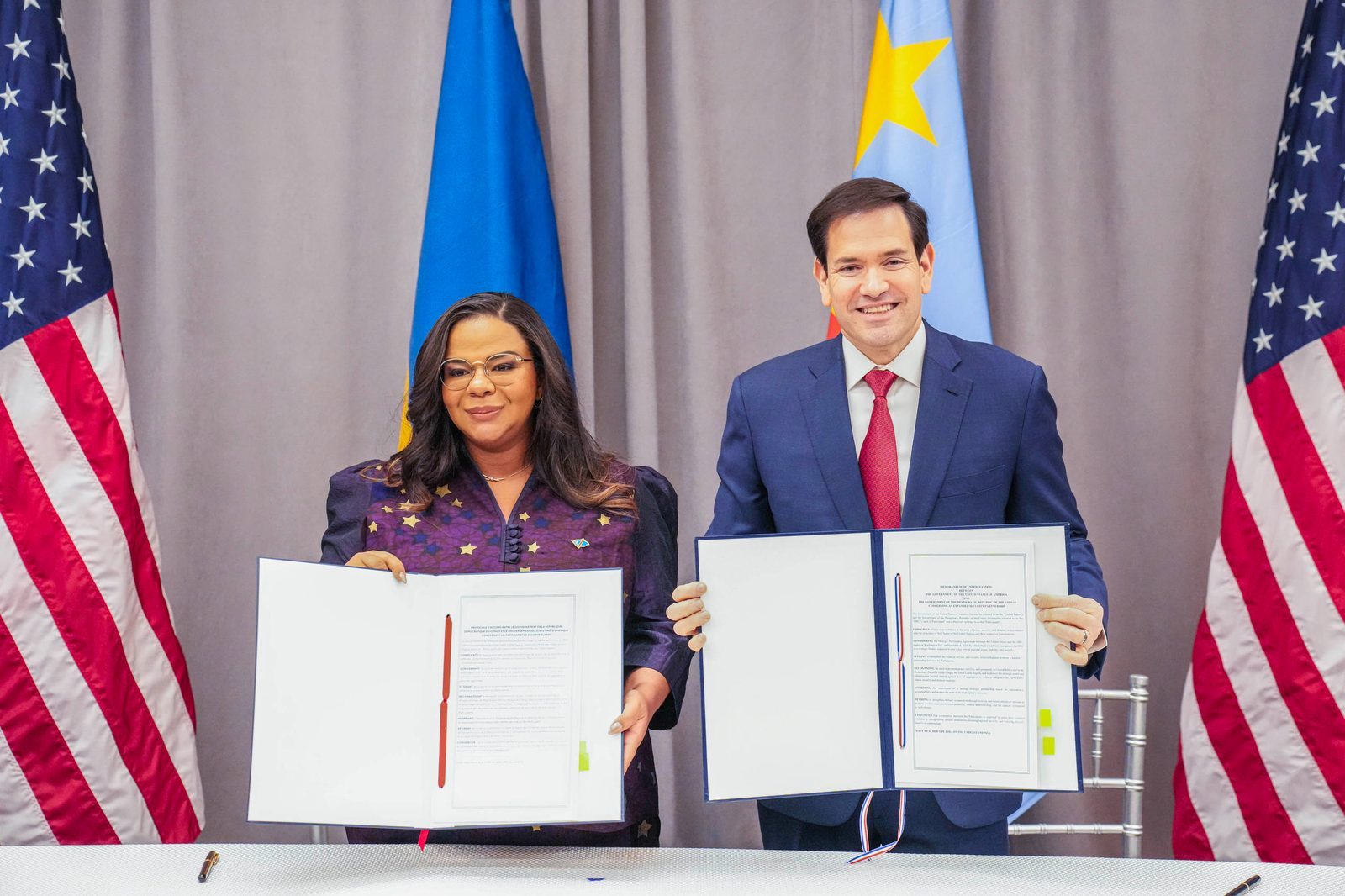

History matters because today’s insecurity developed through colonial extraction, regional wars, institutional weakness, armed-group violence, and incomplete peace processes.
Political and economic systems were organized around extraction rather than accountable institutions.
The new state entered sovereignty amid institutional fragility, external pressure, and political crisis.
Genocide spillover, invasions, armed groups, and two Congo wars reshaped the Great Lakes security order.
Repeated rebellion and resurgence demonstrated the limits of incomplete security and political settlements.
Resolution 2773, Washington diplomacy, and the U.S.–DRC Strategic created new obligations and opportunities.
Writing Congress is not symbolic. Members can shape budgets, authorize programs, investigate failures, press the executive branch, support sanctions, and place Congo on the public record.
Build My LetterIntroduce and pass laws that establish policy priorities and accountability requirements.
Fund humanitarian relief, diplomacy, development, security reform, and oversight.
Question officials, experts, companies, and affected communities in public.
Evaluate whether agreements, sanctions, and taxpayer-funded programs are being implemented.
Press for targeted consequences against actors responsible for violence, corruption, or illicit networks.
Elevate the DRC within U.S. foreign policy and encourage durable regional engagement.
The Strategic Agreement recognizes the importance of reliable, transparent, and mutually beneficial access to critical minerals while supporting increased U.S. investment. Its credibility will depend on implementation, accountable institutions, civilian protection, and measurable benefits for both countries.
Use transparent benchmarks, timelines, and congressional oversight to turn agreements into visible results.
Connect economic cooperation to territorial integrity, regional security, and civilian protection.
Promote traceability, labor safeguards, local value addition, and diversified U.S. partnerships.
Prioritize energy, infrastructure, agriculture, education, technology, and institutional capacity.
Understand the evidence and the policy stakes.
Focus your message on a specific and achievable request.
Use the Action Center to create a clear advocacy message.
Send it to the officials empowered to act.
Share, follow up, and sustain informed public attention.
The DRC affects regional stability, humanitarian security, and critical-mineral supply chains used in American technology, transportation, energy, and defense. A stronger partnership also creates opportunities for responsible U.S. investment.
One letter rarely changes policy alone, but constituent messages influence what offices track, what questions members ask, and which issues receive hearings, statements, funding, or legislative attention. Coordinated advocacy creates a visible pattern.
Yes. This page explains the case for action in a concise format. The Library contains the underlying reports, resolutions, agreements, and detailed USCSN policy briefs.
Official figures and document summaries are linked to their original sources. USCSN recommendations are presented as policy positions, not as statements made by those institutions.
Ask policymakers to advance a principled, accountable, and mutually beneficial U.S.–DRC relationship.
Home to the world’s second-largest tropical rainforest, the Congo River, rare wildlife, dynamic cities, hundreds of cultures, immense agricultural potential, and resources that shape the global economy.
The country’s significance comes from the combination of its geographic scale, population, ecosystems, mineral wealth, river system, agricultural potential, and central position in Africa.
The DRC stretches from the Atlantic coast to the Great Lakes and borders nine countries, placing it at the center of regional trade, security, and diplomacy.
The river and its tributaries connect communities, ecosystems, transport corridors, fisheries, hydropower resources, and major cities.
The country protects exceptional ecosystems and species including okapi, bonobo, mountain gorilla, forest elephant, and vast rainforest habitats.
Cobalt, copper, lithium, coltan, tantalum, gold, and other resources make the DRC strategically important to energy, technology, and industry.
Extensive arable land, water resources, diverse climates, and a young population create major opportunities for food production and agro-industry.
Congolese music, fashion, dance, visual arts, textiles, sculpture, languages, and diaspora communities influence culture across Africa and beyond.
The DRC stretches from the Atlantic coast to the Great Lakes, crossing the equator and containing some of the most important ecosystems on Earth.

Globally important for biodiversity, rainfall, carbon storage, and the livelihoods of millions of people.

Transport, fisheries, hydropower, culture, and trade are all connected to the river and its tributaries.
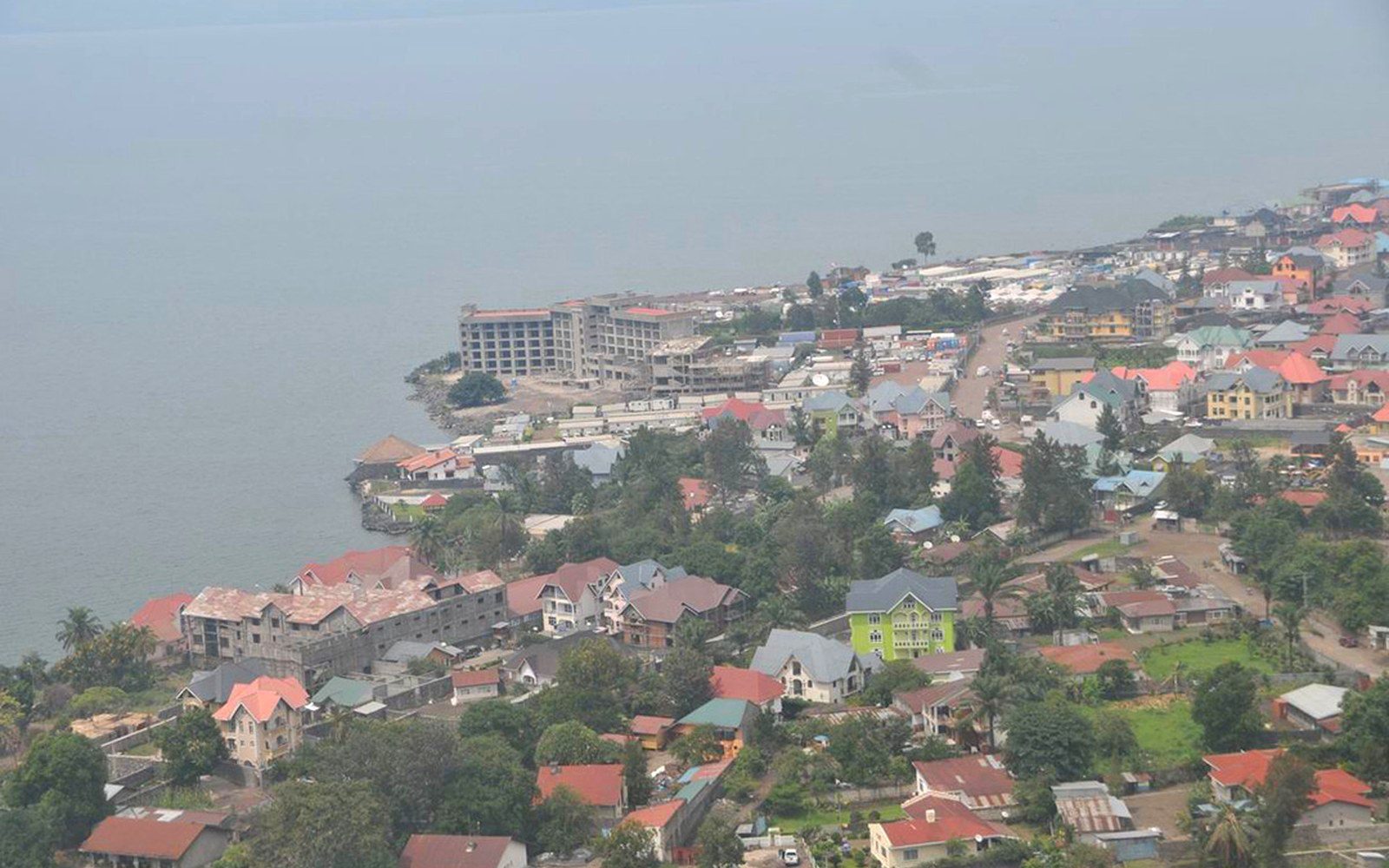
Volcanic landscapes, lakeside cities, mountain ecosystems, and extraordinary tourism potential.
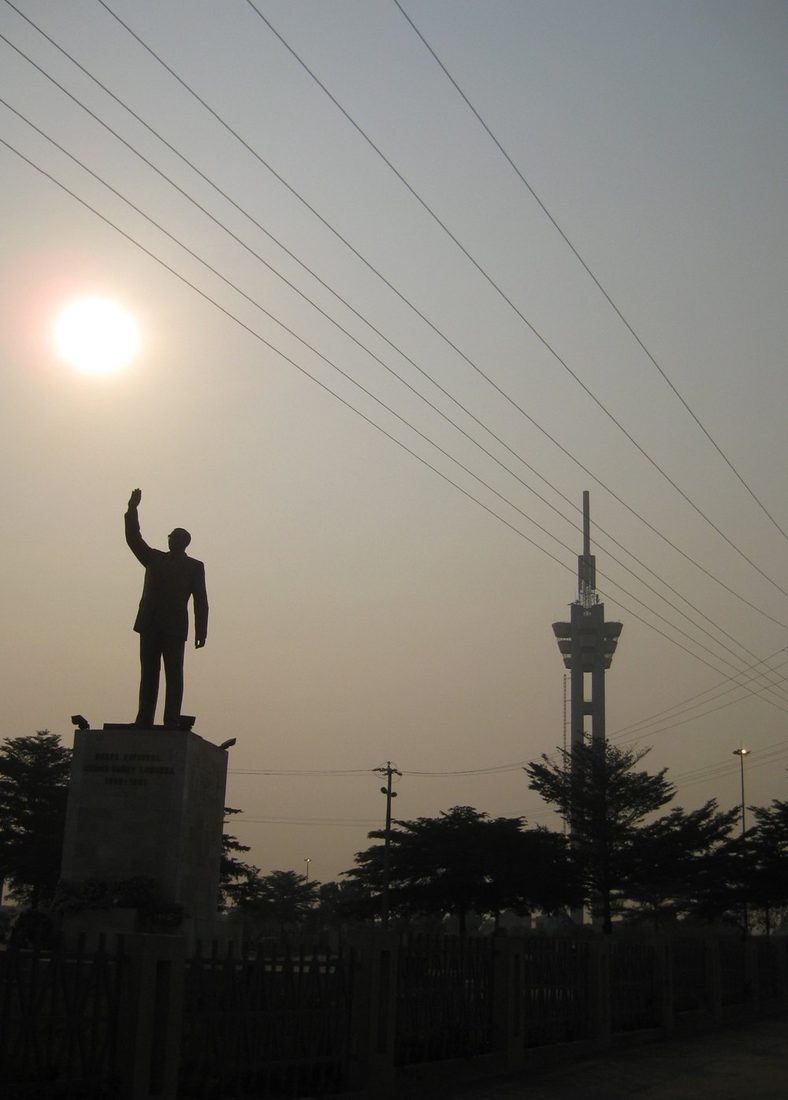
Kinshasa sits along the Congo River, one of Africa’s defining waterways and a central feature of the country’s geography, economy, and daily life.

The DRC contains some of Africa’s most celebrated and ecologically significant protected areas.

Volcanoes, mountain gorillas, savannas, forests, and Lake Edward.
One of the largest tropical rainforest reserves in Africa and critical bonobo habitat.
Savanna ecosystems, elephants, giraffes, and an exceptional conservation history.
Mountain and lowland forests known for the eastern lowland gorilla.
Lakes, wetlands, high plateaus, grasslands, and major freshwater ecosystems.
Each photograph below corresponds to the animal named on its card.

A forest-dwelling relative of the giraffe, native to northeastern DRC.
Photo: k7hpn · CC BY 2.0
Mountain gorillas photographed in Virunga National Park, eastern DRC.
Photo: Cai Tjeenk Willink · CC BY-SA 3.0
A great ape whose wild range lies entirely within the Democratic Republic of the Congo.
Photo: USAID · Public domain
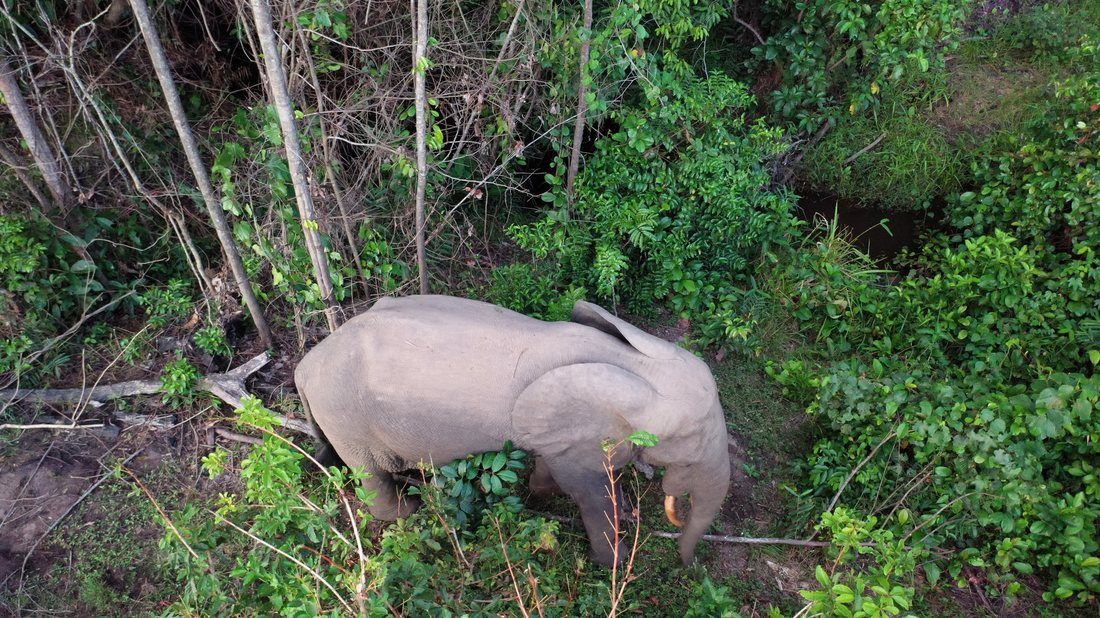
The smaller forest-adapted elephant species of Central and West Africa.
Photo: VIGNA Christian · CC BY-SA 4.0This is an actual raffia cloth from the Kuba Kingdom in the Democratic Republic of the Congo, rather than a generic pattern or unrelated fabric.
Kuba textile traditions include raffia weaving, embroidery, appliqué, and geometric composition developed in the Kasai region.

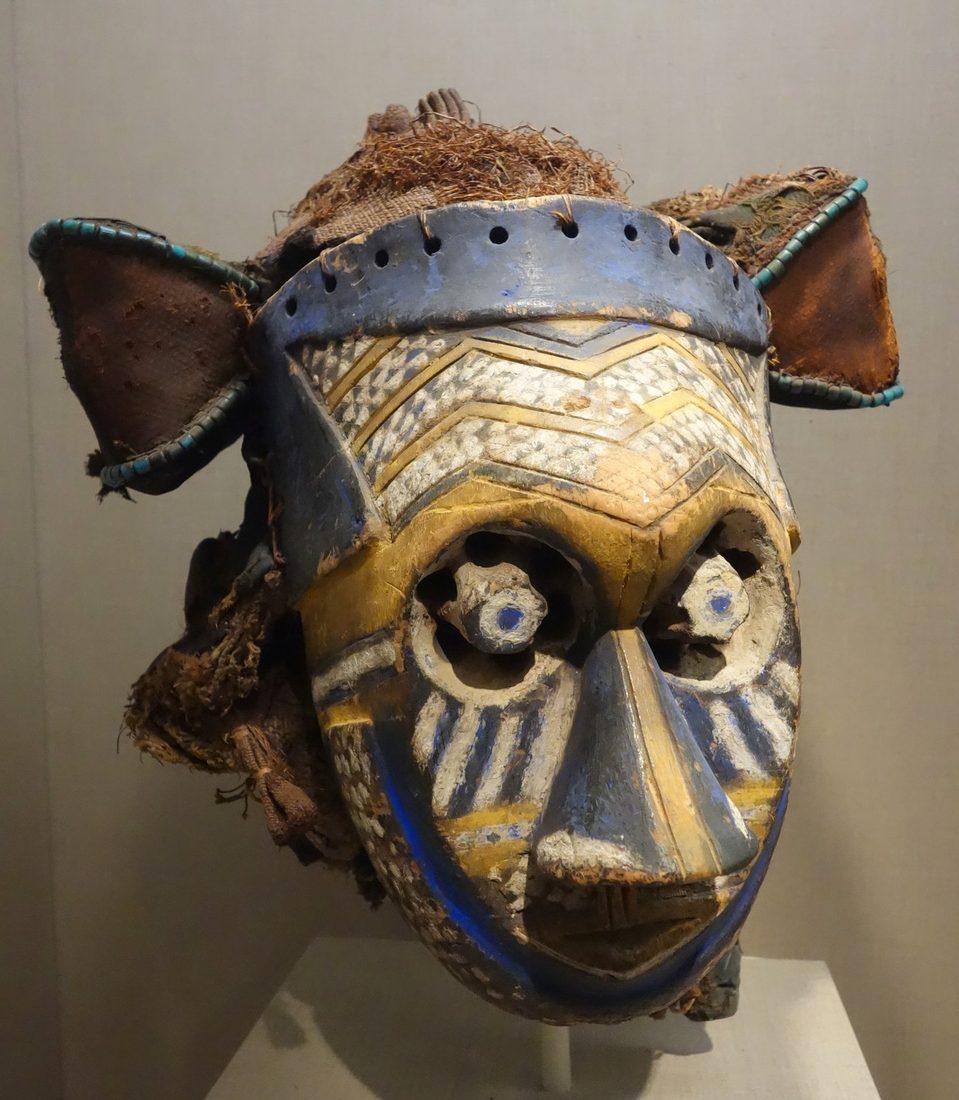
These museum photographs represent distinct mask traditions from the DRC, including Kuba and Pende works.


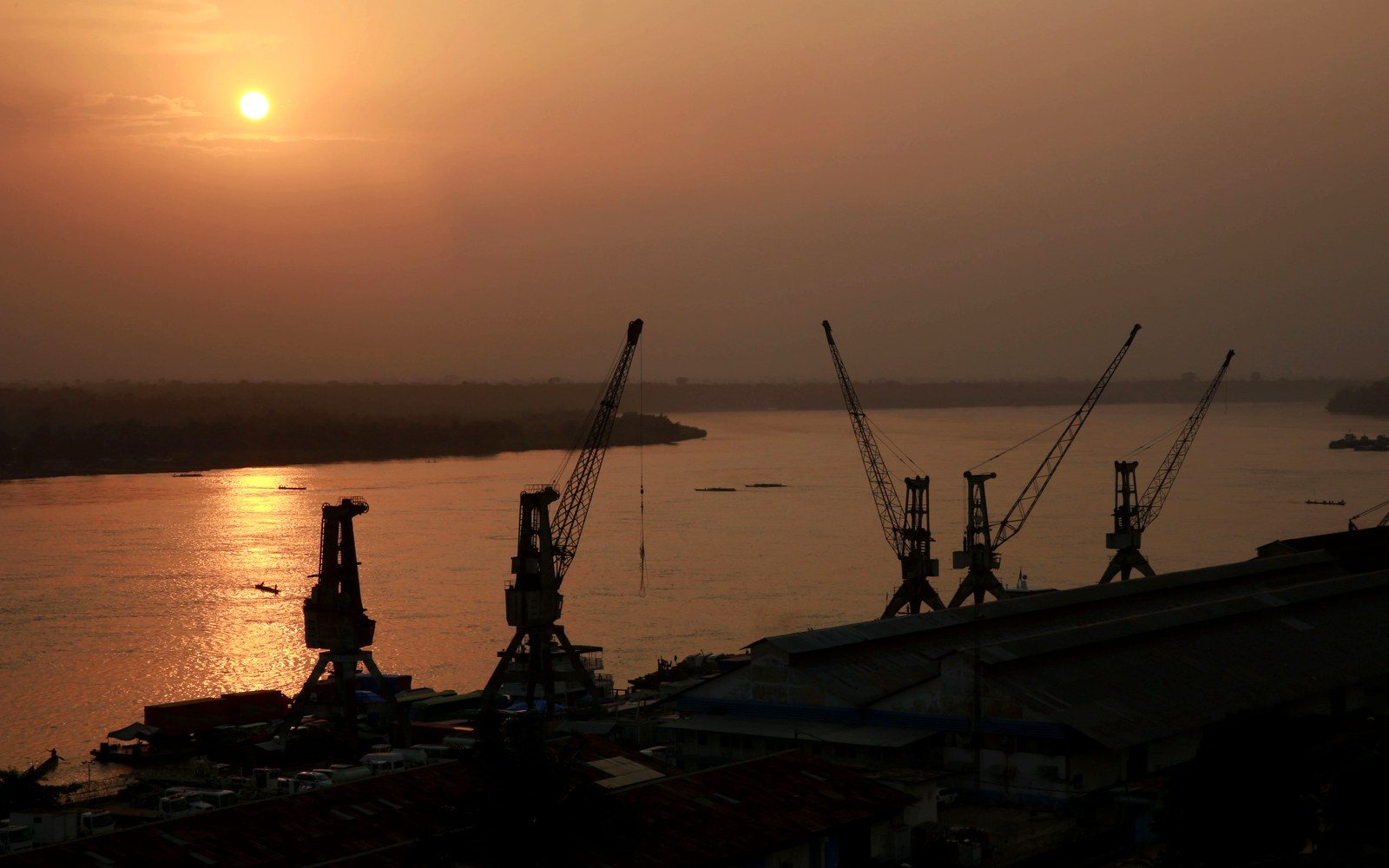
The Congo River system, Lake Kivu, Lake Tanganyika, Lake Edward, Boyoma Falls, and the Inga rapids shape transportation, food systems, energy, settlement, and culture.
The DRC’s future extends beyond extraction. Its opportunity includes responsible mining, local processing, agriculture, energy, manufacturing, technology, logistics, and human capital.
Central to batteries, aerospace, and energy technologies.
Essential for electrification, construction, and modern infrastructure.
Used in electronics, advanced manufacturing, and strategic technologies.
The Congo River gives the country exceptional renewable-energy potential.
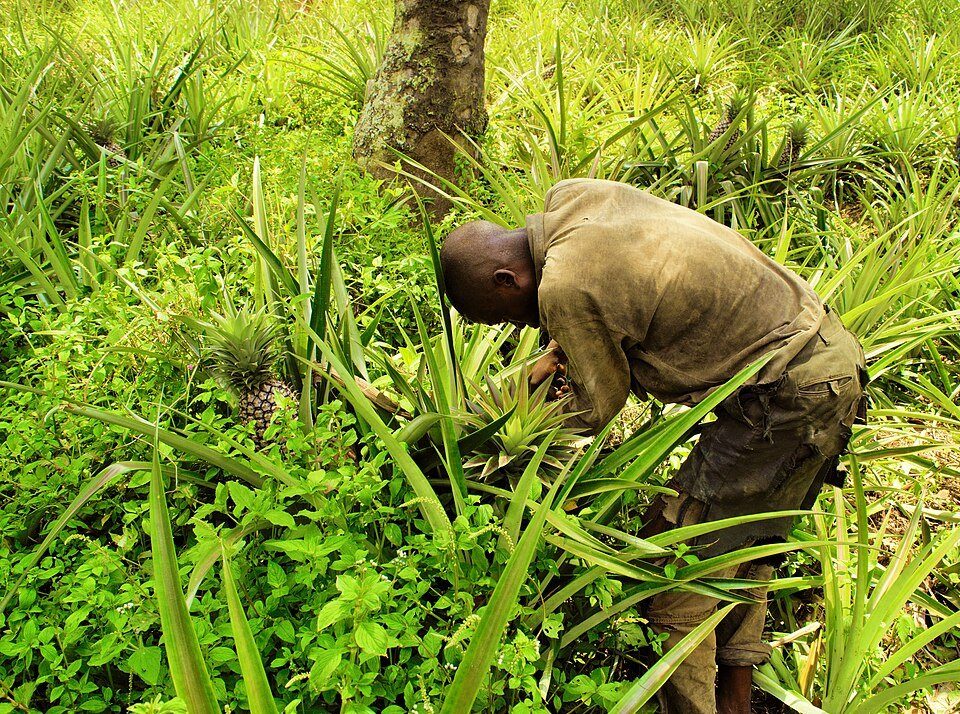
Vast land and water resources could transform national and regional food security.
Processing, refining, manufacturing, and skills development can create lasting wealth.
Volcanoes, gorilla trekking, river expeditions, lakeside retreats, forests, cultural heritage, music, food, and urban life give the DRC extraordinary tourism potential.
Lakeside views, islands, mountain scenery, and access to eastern Congo.
One of the world’s most extraordinary wildlife experiences.
Explore the country through the waterway that has shaped its history and identity.
Music, textiles, sculpture, dance, cuisine, and living traditions.
Museums, music, fashion, nightlife, diplomacy, and the Congo River.
Biodiversity, scientific discovery, conservation, and remote landscapes.
Largest country in Africa by area.
Largest tropical rainforest system after the Amazon.
International land borders—the most of any African country.
Ethnic communities and extensive linguistic diversity.
National languages alongside French.
The Congo River is widely recognized as the world’s deepest river.
Explore the Democratic Republic of the Congo through its provinces, cities, natural resources, cultural heritage, agriculture, music, ecosystems, and people.
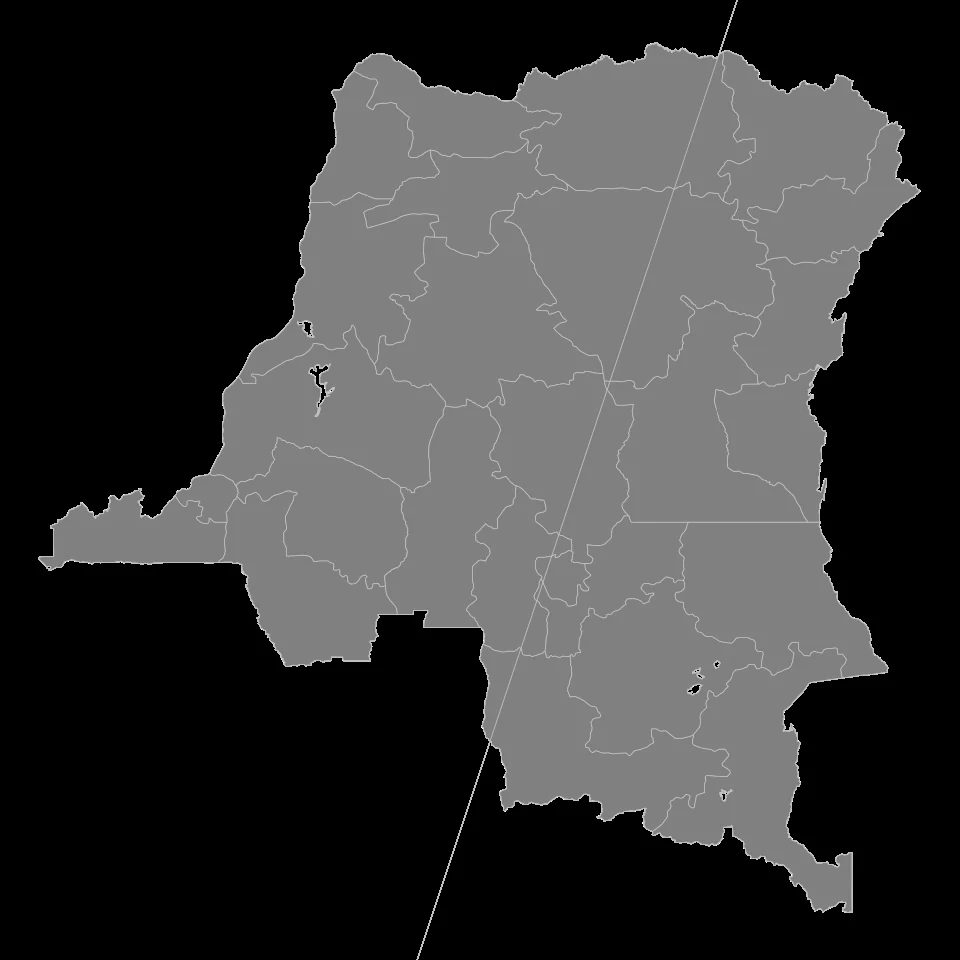
A vast federal landscape reorganized in 2015 into 26 provinces, from the Atlantic coast to the Great Lakes. Click photo to read more.
A vast federal landscape stretching from the Atlantic coast to the Great Lakes.
Explore five major Congolese cities through landmarks that better represent them: Lake Kivu in Goma, central Lubumbashi, the new university campuses in Kananga and Mbuji-Mayi, and the Congo River at Kisangani.
Capital of North Kivu, on Lake Kivu near the Rwandan border and Mount Nyiragongo — a hub for regional trade, humanitarian work, and diplomacy. Click photo for more.
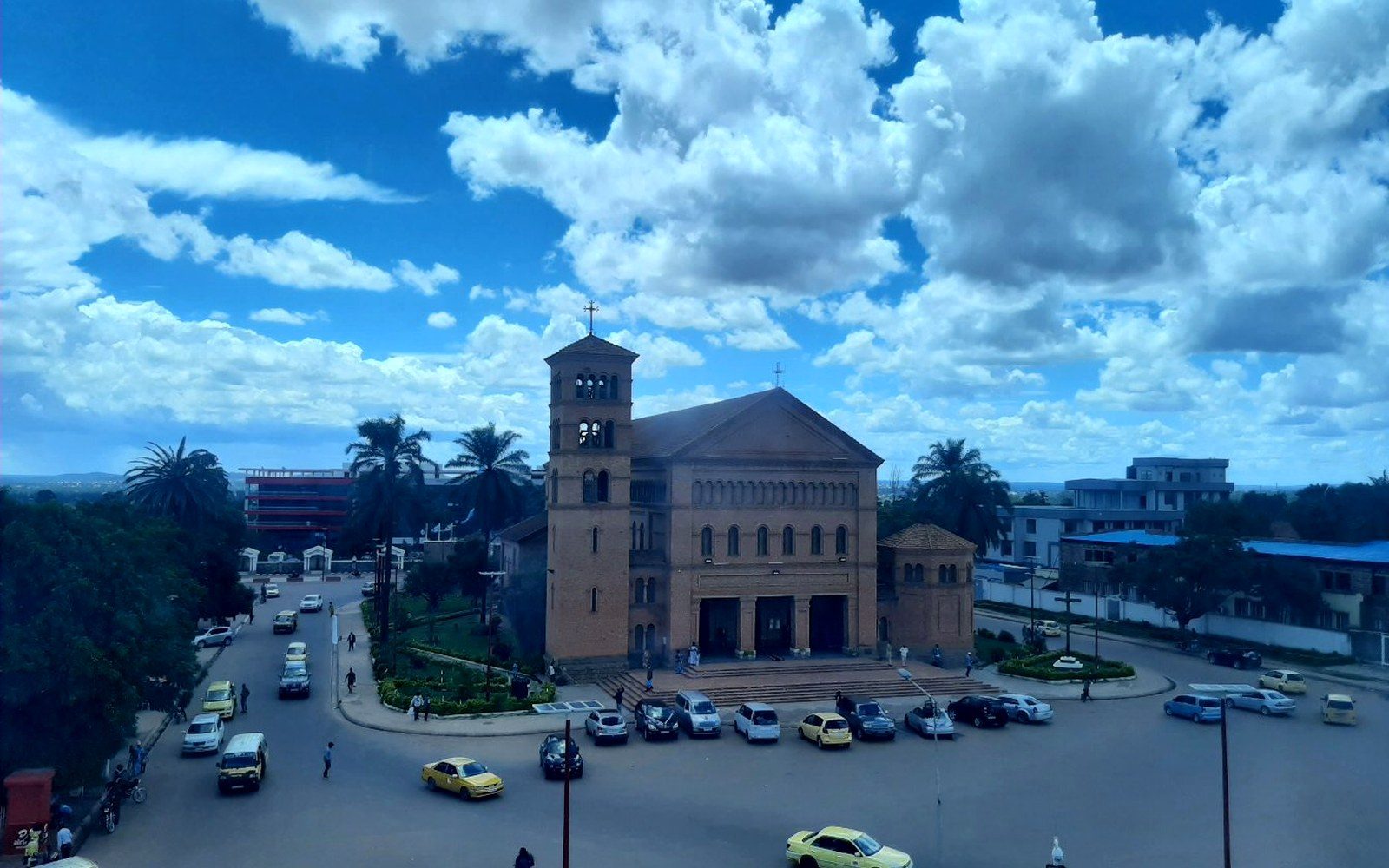
DRC's second-largest city and capital of Haut-Katanga, at the center of the country's copper and cobalt mining belt. Click photo for more.
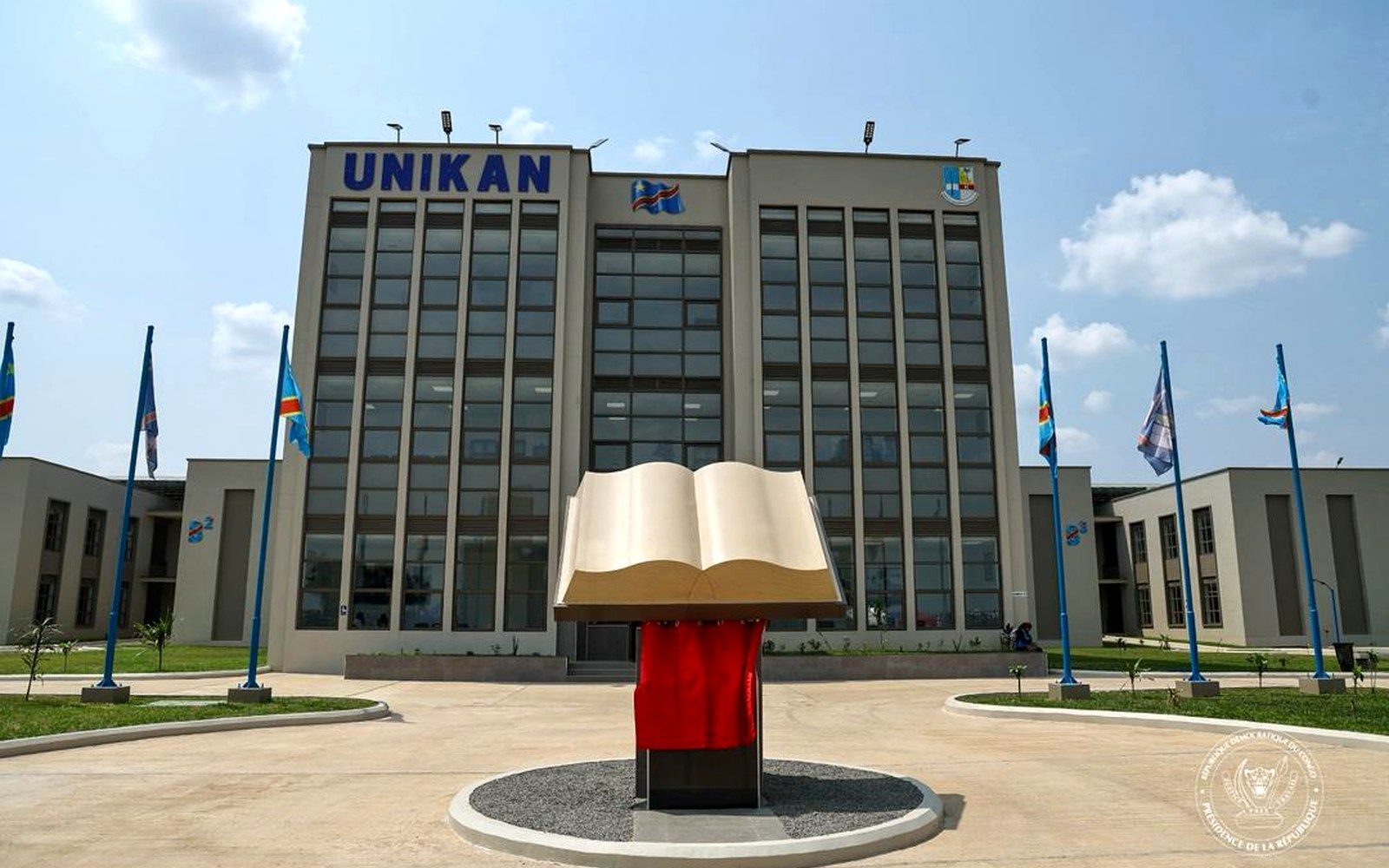
Capital of Kasaï-Central and a historic administrative and educational center in the central Kasaï region. Click photo for more.
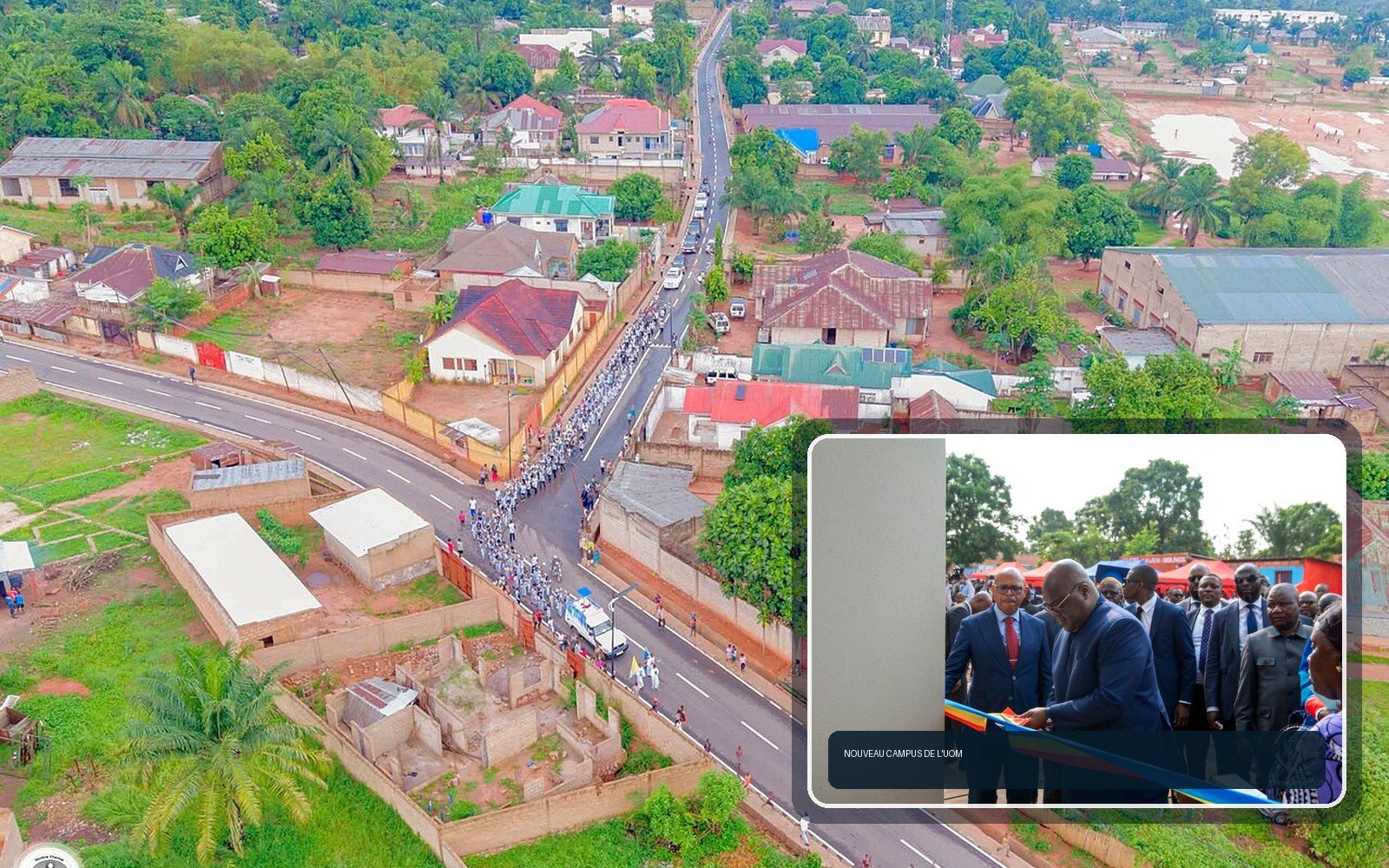
Capital of Kasaï-Oriental, long known as the center of the DRC's diamond-mining industry. Click photo for more.
Capital of Tshopo, on a bend of the Congo River at the edge of the rainforest — historically a key river-trade post. Click photo for more.
The Congo River is the defining geographic feature of the Democratic Republic of the Congo. Click photo to read more.
The Congo River system connects ecosystems, cities, trade routes, and major energy potential.
Agriculture remains the backbone of daily life for most Congolese households, even as the country is often discussed internationally in terms of its mineral wealth. Click photo to read more.
Cassava, maize, rice, coffee, cocoa, palm products, fruit, livestock, and fisheries.
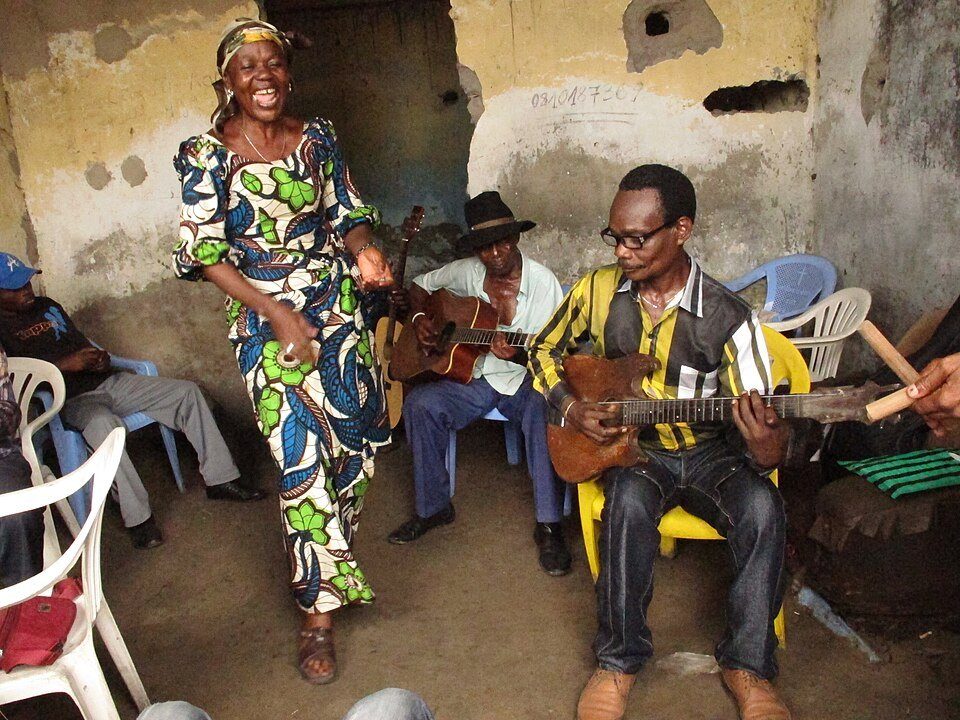
Congolese rumba is one of the country's most influential cultural exports and a genuine point of national pride. Click photo to read more.
Congolese rumba and modern urban music have influenced generations across Africa and the world.

Among the Democratic Republic of the Congo's most celebrated artistic traditions are the raffia textiles historically produced by the Kuba Kingdom in the Kasaï region. Click photo to read more.
Kuba raffia, embroidery, geometric patterns, sculpture, fashion, and visual art.

Masks and royal regalia occupy a central place in the artistic and spiritual traditions of many Congolese peoples, including the Kuba, Pende, Luba, Songye, and Chokwe, among others. Click photo to read more.
Kuba, Pende, Luba, Songye, and other artistic traditions preserve history, ceremony, and identity.
The Democratic Republic of the Congo is home to some of Africa's most significant protected areas, several of which carry UNESCO World Heritage status. Click photo to read more.
Virunga, Kahuzi-Biega, Salonga, Garamba, volcanoes, forests, lakes, and wildlife.

The Democratic Republic of the Congo sits at the heart of the Congo Basin, the world's second-largest contiguous rainforest after the Amazon and one of the planet's most important carbon sinks, making the country's forests globally significant to efforts to address climate change. Click photo to read more.
Okapi, bonobo, mountain gorilla, forest elephant, and globally important habitats.
This page presents the major historical periods of the Democratic Republic of the Congo and the long, consequential history of relations between the Congo and the United States.
The region contained sophisticated political systems, trade networks, artistic traditions, and diplomatic structures long before European conquest.
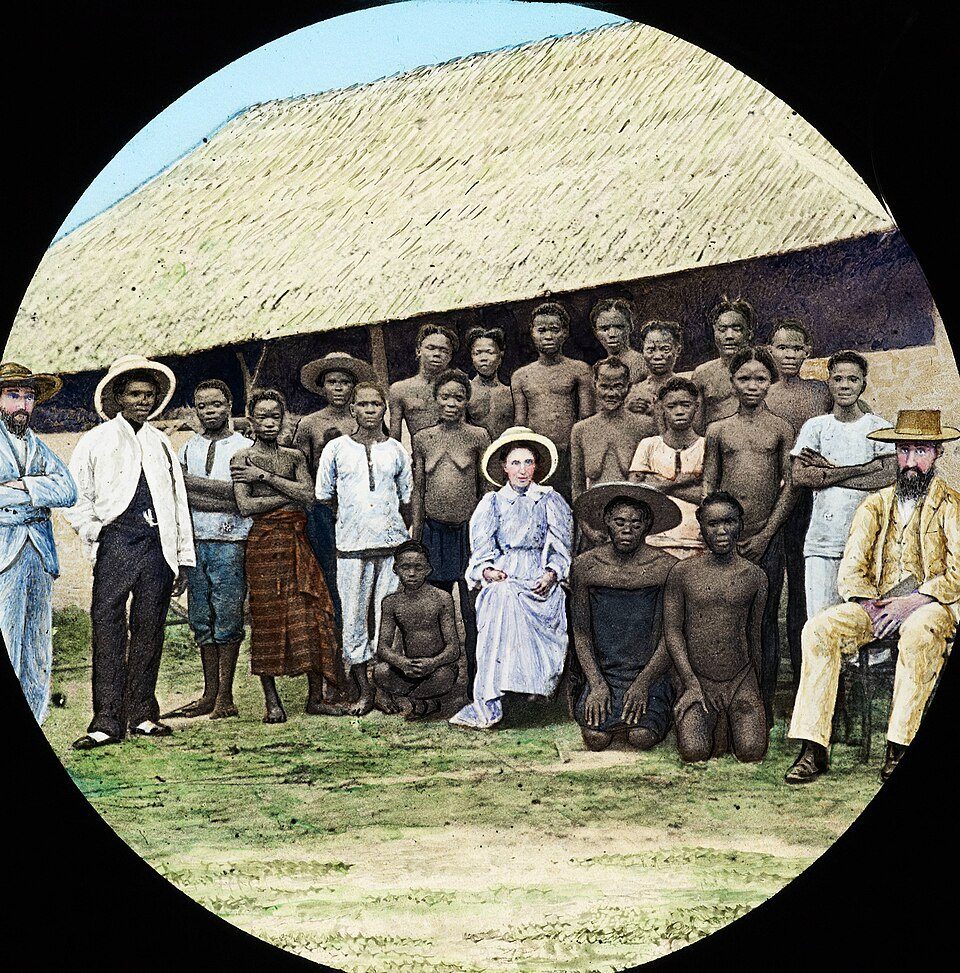
Catholic and Protestant missions expanded during the colonial era. Mission institutions contributed to schooling and health care, while also operating within—and sometimes legitimizing—the broader colonial system.
Prototype source: International Mission Photography Archive / Wikimedia Commons.King Leopold II personally controlled the Congo Free State until 1908. Belgium then governed the Belgian Congo until independence, expanding infrastructure and mining while denying Congolese citizens political equality and sovereignty.
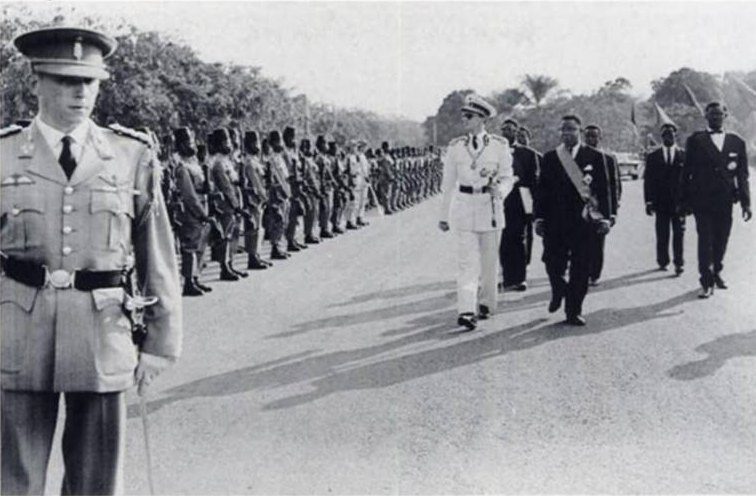
King Baudouin traveled to Léopoldville for the independence ceremonies. His speech praised Belgium’s colonial project, while Patrice Lumumba’s historic response emphasized exploitation, humiliation, and the struggle for freedom.
Prototype source: Congopresse / Wikimedia Commons.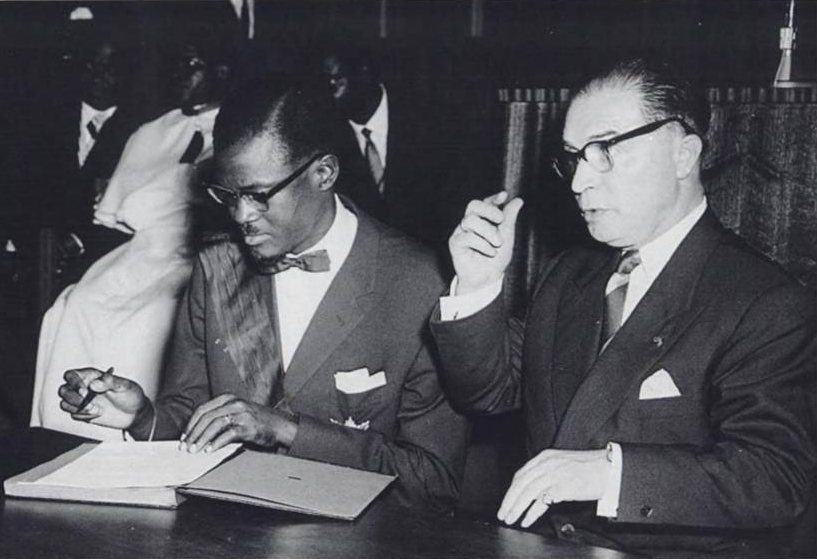
Joseph Kasa-Vubu became president and Patrice Lumumba became prime minister. Mutiny, secession, foreign intervention, Cold War rivalry, and Lumumba’s assassination quickly destabilized the new republic.
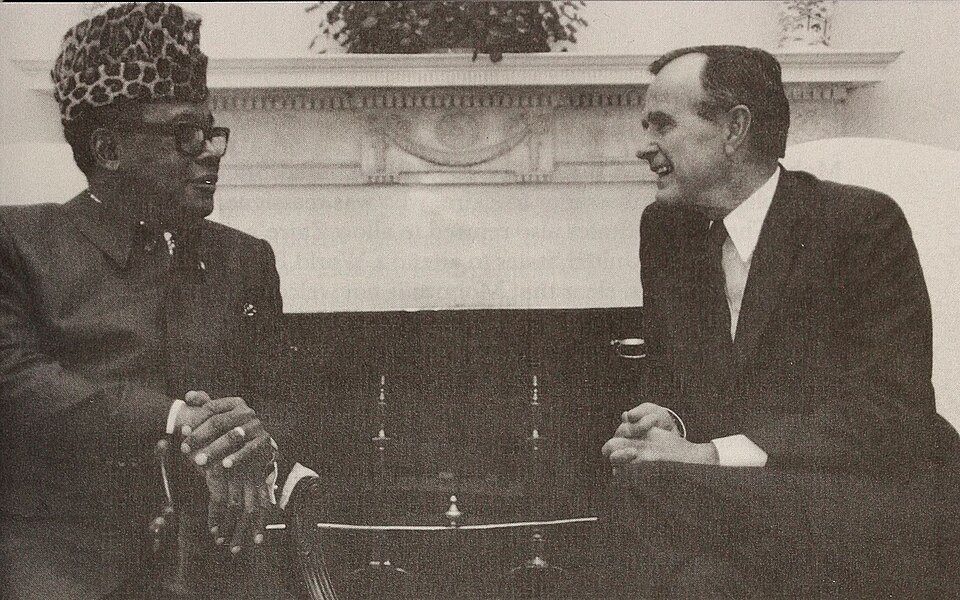
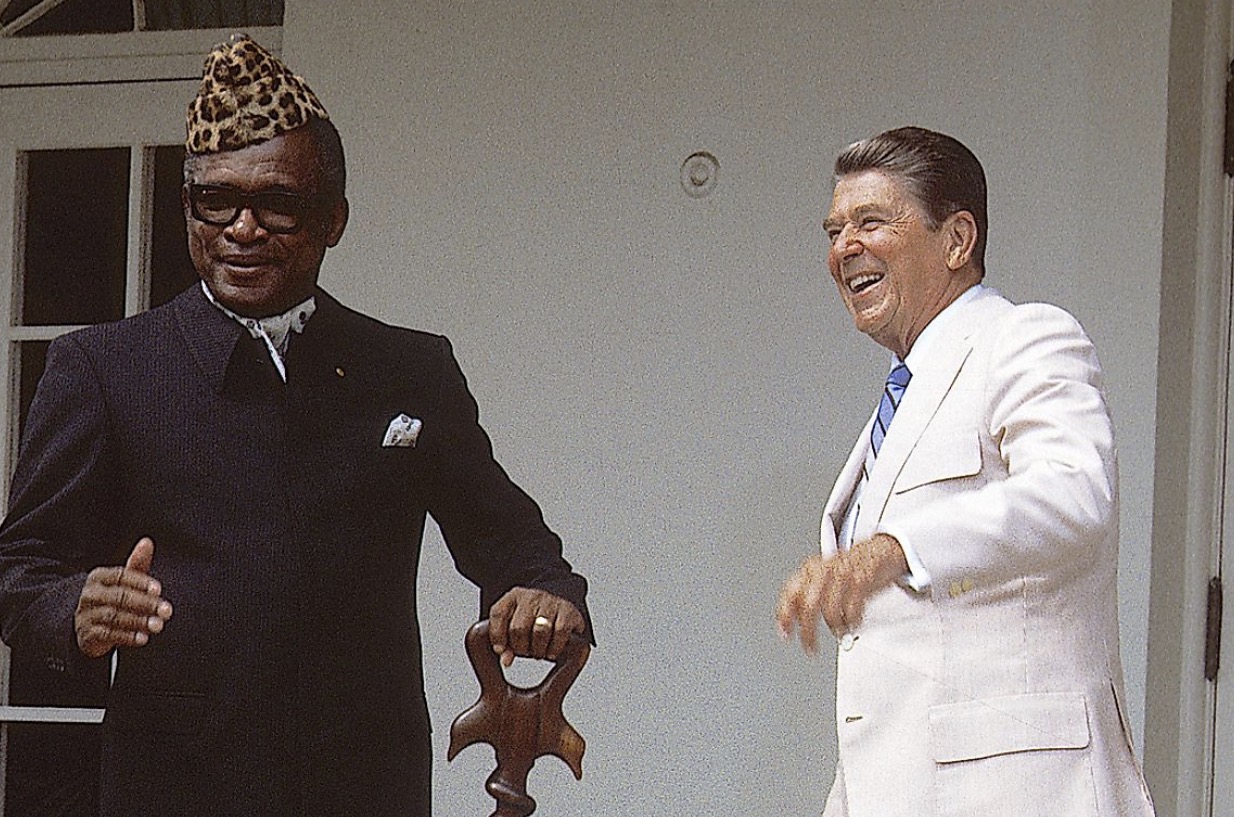
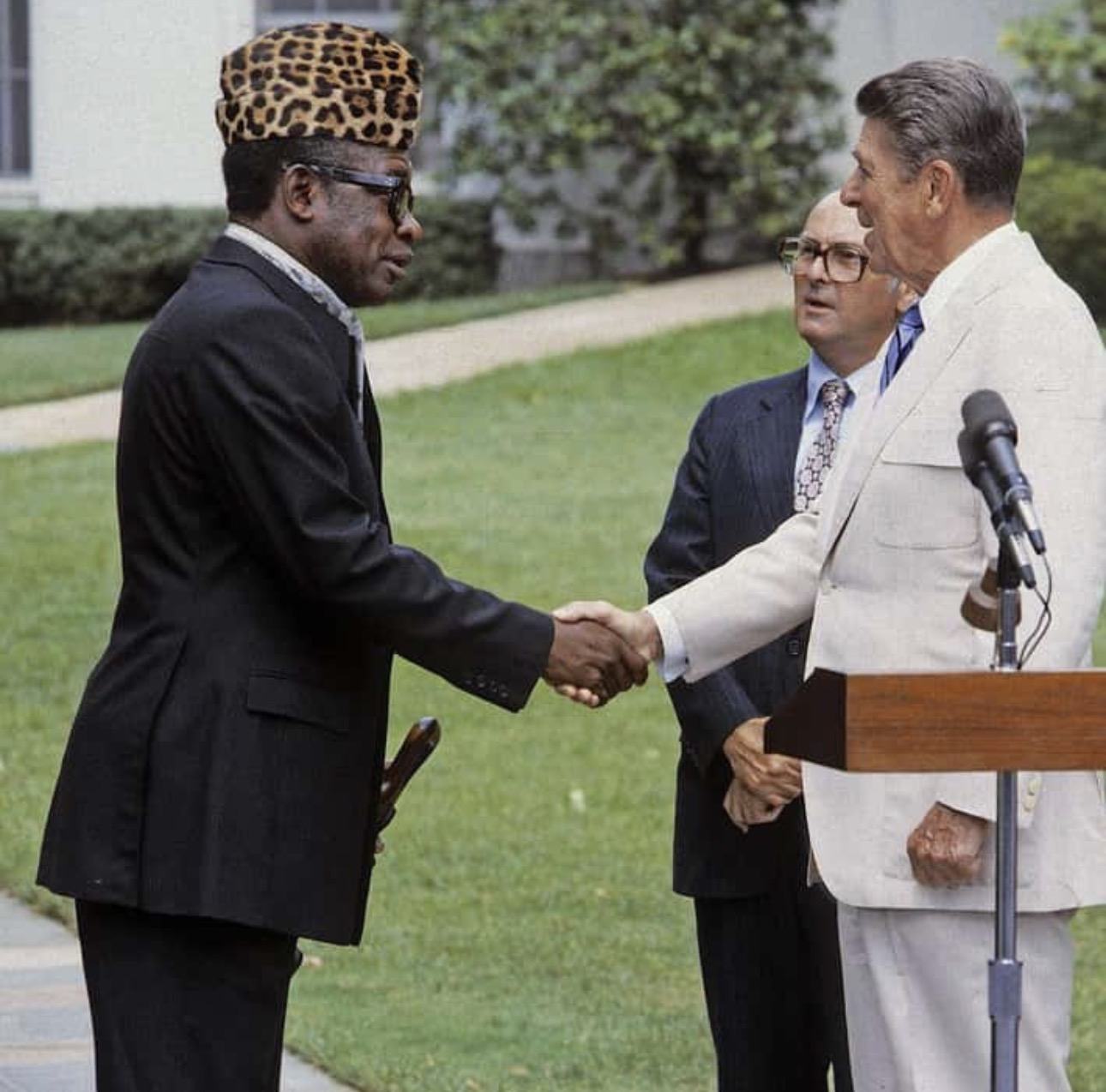
Mobutu Sese Seko consolidated power and renamed the country Zaire in 1971. The United States treated his government as a major anti-communist partner despite authoritarian rule, corruption, and severe institutional decline.
Official White House photograph by David Valdez.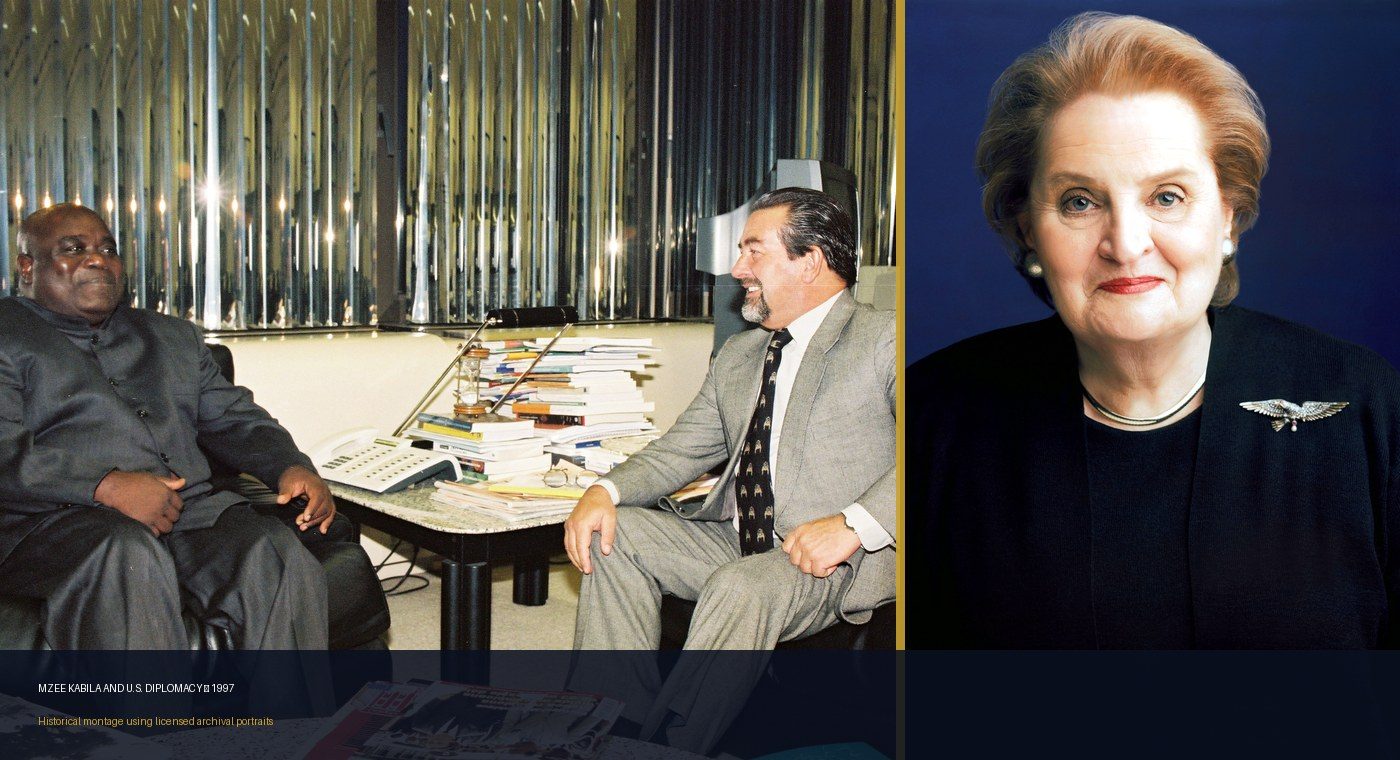
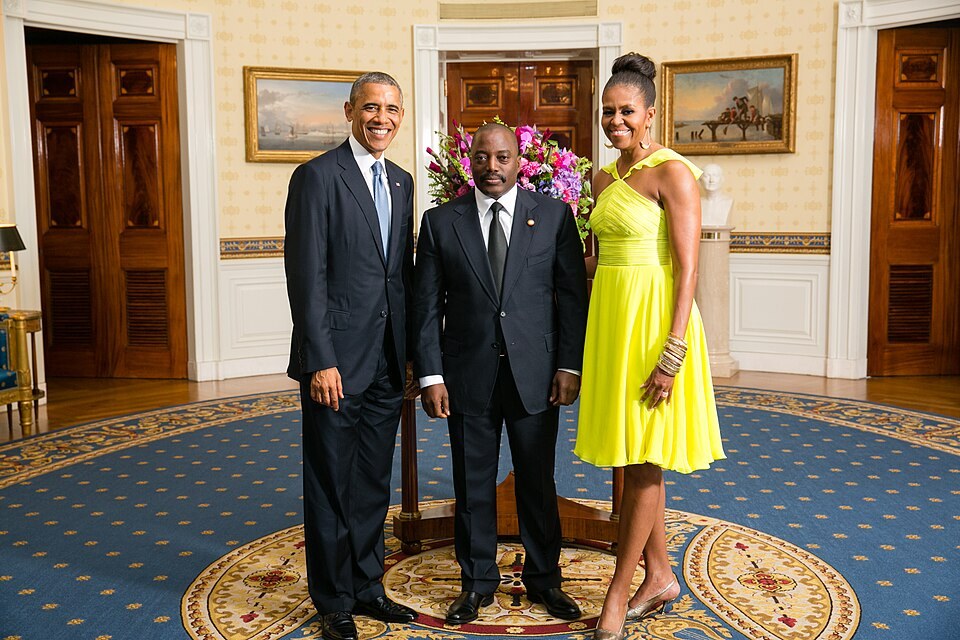
After the fall of Mobutu, President Laurent-Désiré Kabila engaged senior American officials, including U.S. Secretary of State Madeleine Albright, on regional war, human rights, reconstruction, humanitarian investigations, and the future of relations between Kinshasa and Washington.
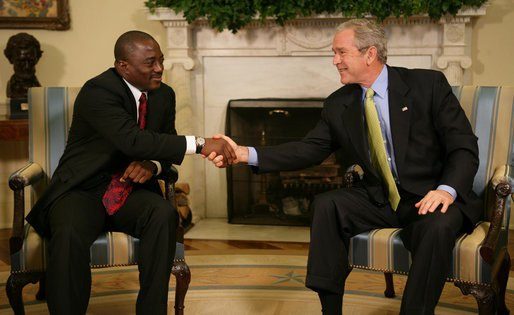
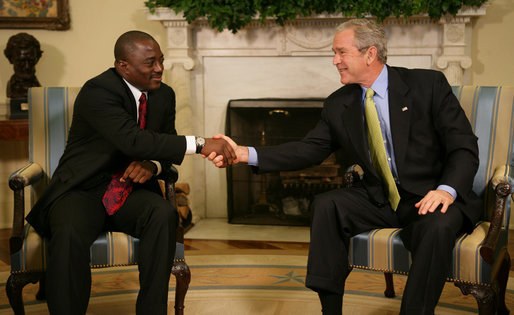
Joseph Kabila assumed the presidency after his father’s assassination. The United States supported peace negotiations, constitutional transition, elections, HIV/AIDS programs, trade, regional stability, and postwar reconstruction.
Official White House photograph by Eric Draper; U.S. government public domain.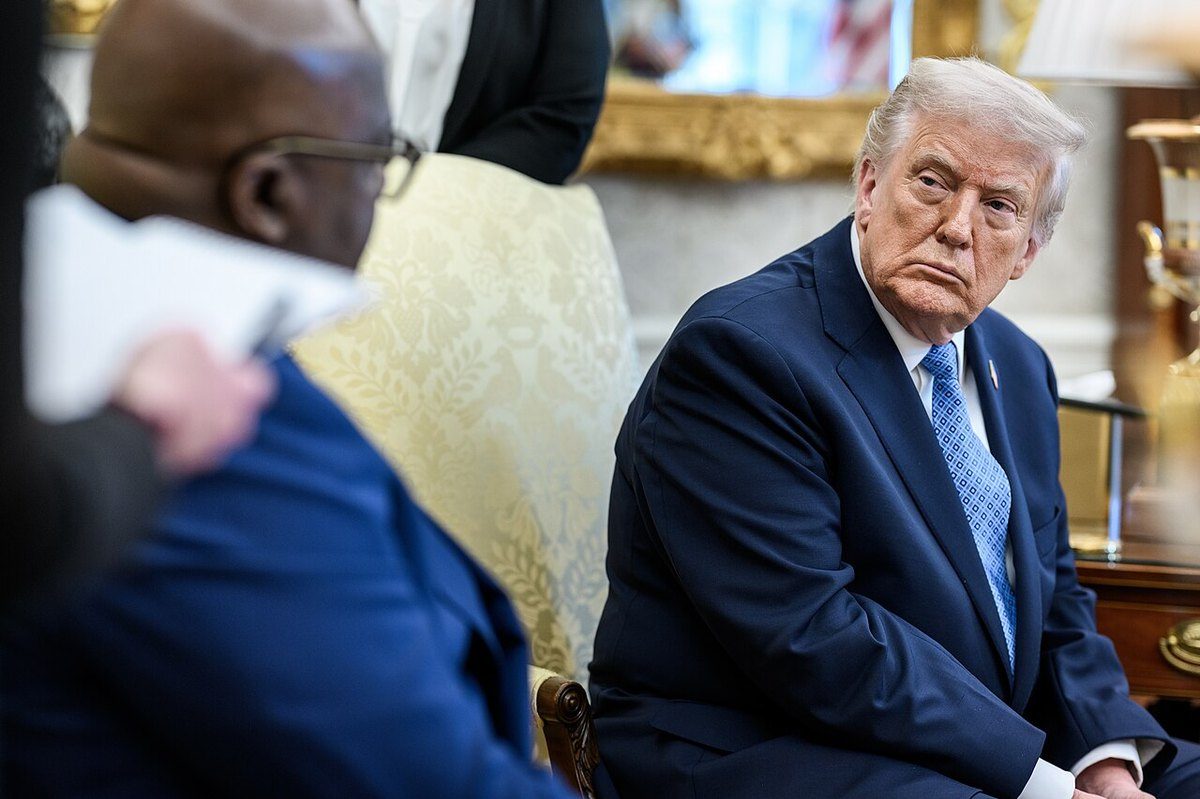
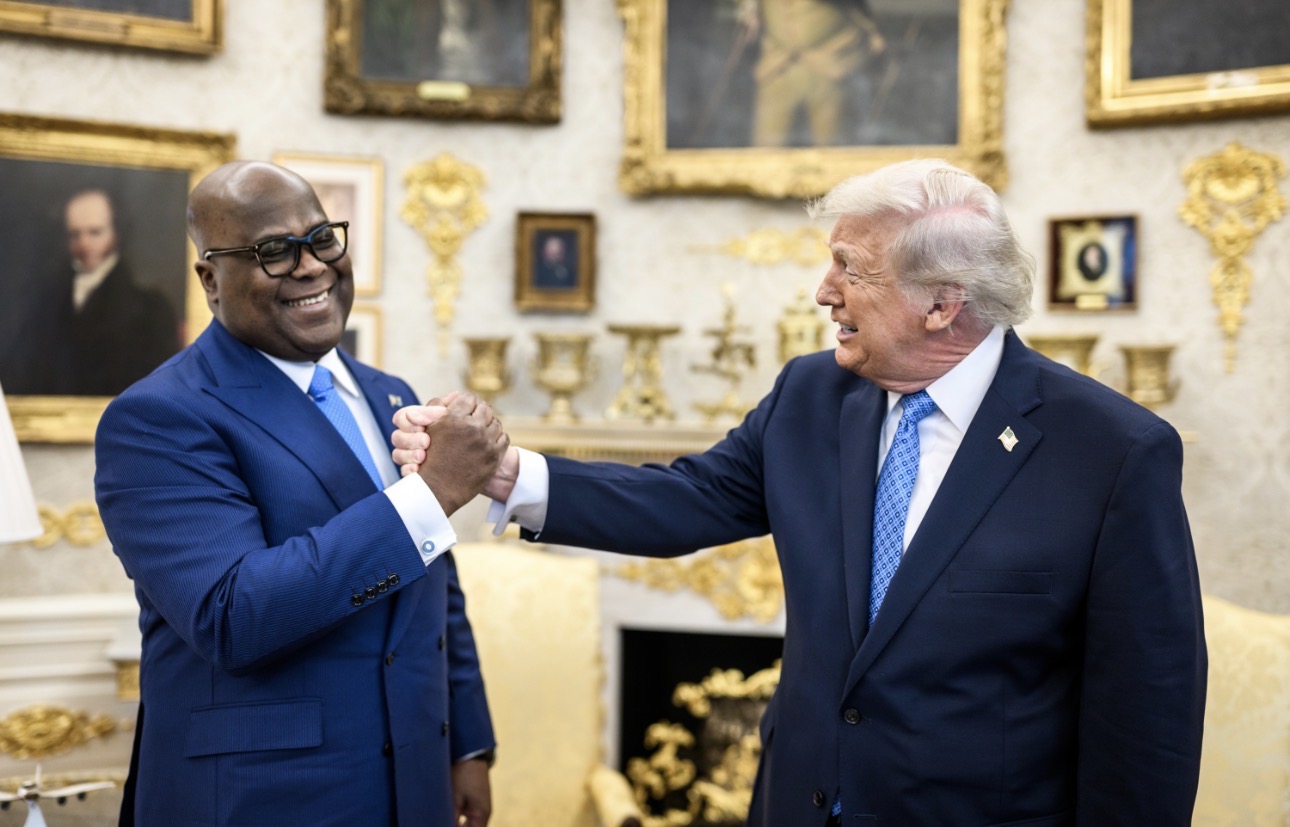
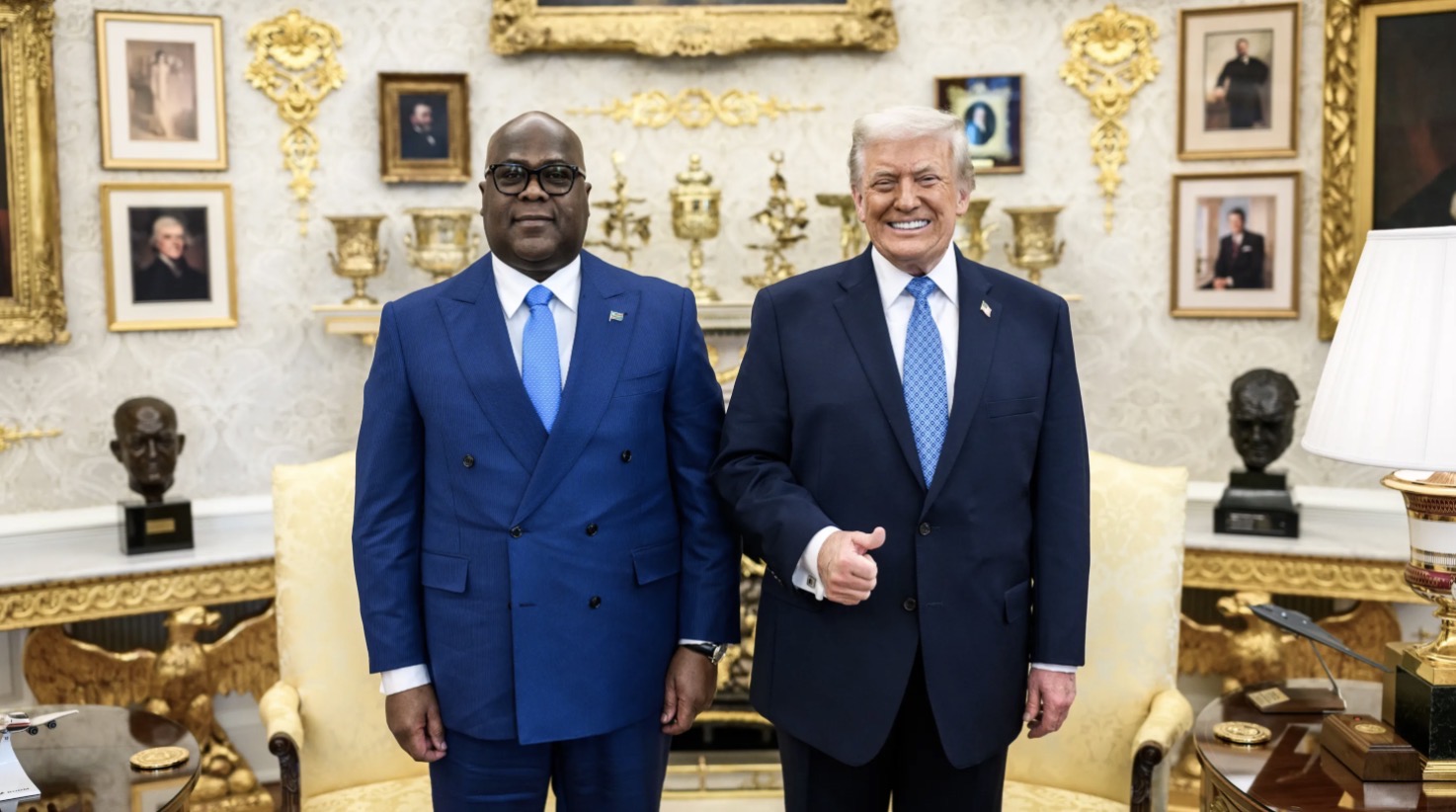
Under President Félix Tshisekedi, U.S.–DRC relations have increasingly focused on regional peace, sanctions, democratic governance, humanitarian needs, infrastructure, investment, and transparent critical-mineral supply chains.
The relationship predates the modern Congolese state and includes missionaries, reform campaigns, recognition of independence, Cold War covert action, military and diplomatic support, democracy programs, and contemporary strategic competition over peace and critical minerals.
American and European missionaries documented conditions in the Congo. International reform campaigns—including voices from the United States—helped expose abuses under Leopold II’s Congo Free State.
The United States recognized Congo’s independence and established diplomatic relations on the day the country became independent from Belgium.
U.S. policy was driven by Cold War fears. Declassified records document a covert program aimed at removing Lumumba from power and discussions of assassination plans, while U.S. policy supported anti-communist political and military actors.
Washington supported Mobutu’s Zaire as a strategic anti-communist ally, even as authoritarianism, corruption, and institutional deterioration deepened.
After Mobutu’s fall, U.S. envoys engaged Laurent-Désiré Kabila and later Joseph Kabila on human rights, the Congo Wars, humanitarian access, regional peace, and political transition.
U.S. engagement included peace diplomacy, electoral support, public-health programs, humanitarian relief, security cooperation, and pressure for constitutional transfers of power.
The relationship has expanded around eastern DRC security, sanctions, economic cooperation, critical minerals, infrastructure, health, democracy, and a more formal strategic partnership.
USCSN develops policy analysis and organizes communities around U.S.–DRC relations.
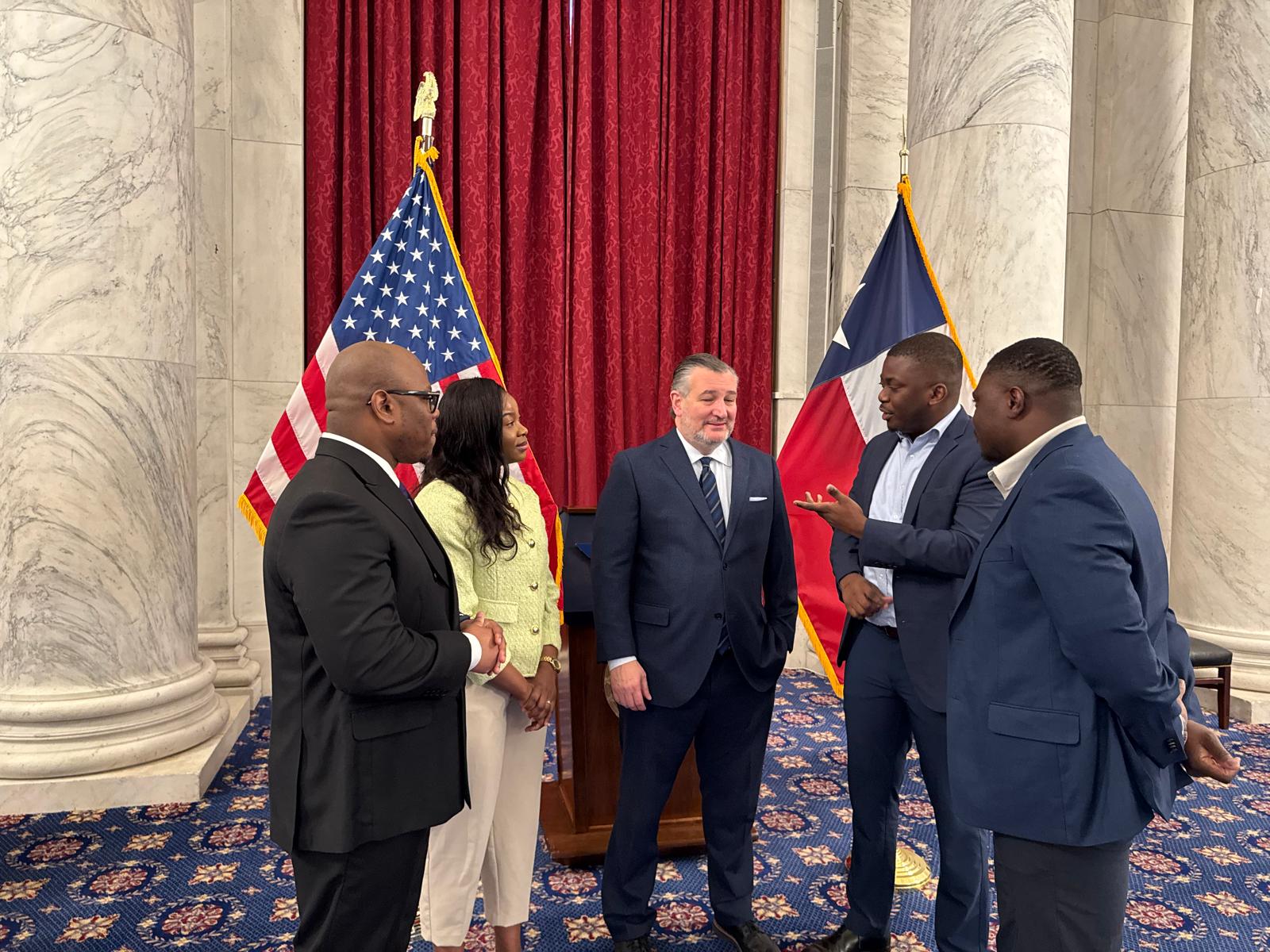
Members of the US-Congo Strategic Network met with United States Senator Ted Cruz to explain why lasting peace in the Democratic Republic of the Congo directly advances American strategic, economic, and security interests.
The discussion emphasized that stability in the DRC can strengthen responsible access to critical minerals, reduce regional instability, support transparent investment, protect civilians, and create a stronger foundation for long-term United States–Congo cooperation.
A stable Congo contributes to regional security and reduces the influence of armed networks.
Peace makes transparent, responsible, and mutually beneficial mineral partnerships possible.
Stronger relations with the DRC support supply-chain resilience, diplomacy, and economic opportunity.
The meeting reflected USCSN’s commitment to bringing informed Congolese and diaspora perspectives directly to American policymakers.
Briefs on security, governance, diplomacy, trade, critical minerals, and humanitarian issues.
Letters, hearings, sanctions campaigns, legislative education, and direct engagement.
Volunteer networks, public discussions, X Spaces, briefings, and community action.
The US-Congo Strategic Network newsletter shares organizational updates, policy analysis, advocacy campaigns, event announcements, and opportunities for the diaspora and partners to participate.
Join our mailing list for periodic updates. We will not sell your information or send unrelated commercial messages.
New initiatives, partnerships, meetings, publications, and organizational milestones.
Concise summaries of developments affecting U.S.–DRC relations and the Great Lakes region.
Petitions, letters, hearings, sanctions campaigns, and opportunities to contact policymakers.
No public editions have been added yet. Published newsletters will appear here by date and subject.
This area is ready for PDF editions, web articles, or links to your email-platform archive.
Policy conversations, public briefings, and digital forums connecting the United States and the Democratic Republic of the Congo.
Every confirmed USCSN event, in one place. Registration links open in a new tab.
Our next public conversation will appear here as soon as registration opens.
Receive event announcements, reminders as the date approaches, a live notice when the event starts, and a short follow-up afterward.
A curated, continuously expandable library of peace agreements, strategic partnerships, United Nations investigations, human-rights reports, economic studies, sanctions monitoring, humanitarian data, and institutional archives concerning the Democratic Republic of the Congo.
This Research Library exists because the debate over U.S. policy toward the Democratic Republic of the Congo is too often shaped by secondhand summaries, social media claims, and outdated talking points rather than the primary documents themselves. USCSN built this page as a single, organized starting point for journalists, students, congressional staff, diaspora community members, and anyone seeking to understand the Congo conflict, the U.S.–DRC relationship, and the peace process through the source documents themselves.
The collection is organized into seven categories covering human rights and accountability, the Washington Accords and U.S.–DRC agreements, current peace processes, historical peace agreements, UN Security Council and Group of Experts reporting, economic and development research, and humanitarian and public-health data. Each entry links directly to the original institution so readers can review the evidence and reach their own conclusions.
Begin with the category buttons below, then use the search bar and filters to narrow the full library to the agreements, reports, data, or institutional records you need.
Macroeconomic analysis covering growth, public finance, mining dependence, employment, poverty, security expenditure, and state-owned enterprise reform.
This is a macroeconomic report published by the World Bank as part of its regular "DRC Economic Update" series, which tracks the country's growth, public finances, and structural reform agenda. This particular edition focuses on the Democratic Republic of the Congo's state-owned enterprises (SOEs) — the government-controlled companies that dominate sectors such as mining (Gécamines), electricity (SNEL), water, transport, and telecommunications. These enterprises are central to the Congolese economy but have long been criticized for weak governance, financial losses, opaque management, and underperformance relative to their potential, given how much of the country's mineral wealth flows through or near them. The report examines growth trends, public revenue and spending, the country's continued heavy dependence on mining exports (particularly copper and cobalt), employment and poverty indicators, security-related expenditure driven by the conflict in the east, and — as its central theme — options for reforming SOE governance, transparency, and financial sustainability. Why it matters: state-owned enterprise reform sits at the intersection of nearly every major policy debate covered elsewhere in this library — it affects whether mineral revenue actually reaches the national budget and public services, whether the critical-minerals agreements discussed in the Washington Accords translate into broad economic benefit rather than elite capture, and whether donor and investor confidence in the DRC's institutions improves. For anyone trying to understand whether the DRC's mineral wealth is likely to translate into durable development, rather than remaining a source of conflict and corruption, this report is one of the most direct primary sources on the institutional plumbing that determines the answer.
Official implementation updates, oversight meetings, commitments, and compliance discussions following the Washington agreement.
This entry gathers the official statements, updates, and communications issued by the U.S. Department of State regarding the oversight mechanism established to monitor implementation of the June 2025 Washington Peace Agreement between the Democratic Republic of the Congo and Rwanda. Peace agreements of this kind typically fail or stall not at the signing ceremony but in the months and years of implementation that follow, so the creation of a dedicated oversight committee — and the running record of its statements — is one of the more consequential and easily overlooked parts of the broader Washington Accords framework. These statements typically cover meeting schedules, progress updates against the commitments made in the agreement (such as troop withdrawals, disarmament of armed groups, or economic integration steps), areas of continued disagreement or delay, and public messaging intended to reassure both governments' domestic audiences and the international community that the process remains on track. Why it matters: this is the closest thing available to a real-time report card on whether the Washington Accords are actually being implemented as written, rather than existing only on paper. For policymakers, journalists, and advocates trying to hold both governments — and the United States, as a guarantor and convener of the process — accountable to the commitments made in 2025, this oversight record is the primary evidence base. It is also a useful check against overly optimistic or overly pessimistic narratives about the peace process, since the committee's own language and cadence of updates tend to reflect the real state of implementation more accurately than press coverage on either extreme.
Agreement establishing a mechanism to monitor the ceasefire, investigate alleged violations, and support transparency.
This document establishes the formal mechanism through which the ceasefire negotiated as part of the Doha peace process between the Congolese government and the AFC/M23 coalition is monitored, verified, and enforced in practice. Ceasefires without a credible monitoring and verification structure tend to collapse quickly, since neither side has a reliable way to confirm the other's compliance or to investigate and publicize violations — this mechanism, brokered with Qatari facilitation, is meant to close that gap. It typically defines who sits on the monitoring body (often a mix of the parties themselves, regional organizations, and international observers), how alleged violations are reported and investigated, what counts as a violation, and what consequences or corrective steps follow when one is confirmed. Transparency is a central design goal: without an agreed, credible record of what is actually happening on the ground in contested areas of eastern DRC, both sides can plausibly deny violations and public trust in the broader peace process erodes. Why it matters: this mechanism is arguably the single most operationally important document in the "Current Peace Processes" category, because grand declarations of principle are only as good as the on-the-ground enforcement that backs them up. For anyone assessing whether the Doha framework is actually holding — as opposed to simply existing as a diplomatic achievement — the monitoring mechanism's design, and its actual track record of investigating and resolving reported violations, is the most concrete evidence available. Readers should also note that monitoring mechanisms of this kind are only as strong as the political will of both parties to accept unfavorable findings, which is precisely why their day-to-day track record, not just their formal design on paper, is the real test of whether this process differs from previous ceasefires that ultimately broke down.
Assessment of tax expenditures, incentives, growth, equity, job creation, and public revenue in the DRC.
This World Bank report examines the system of tax incentives and exemptions that the Democratic Republic of the Congo has historically offered to attract investment, particularly in the mining sector, and asks whether that system still serves the country's development goals. Tax incentives — reduced rates, exemptions, or preferential terms offered to investors — are a common tool used by resource-rich developing countries to attract capital, but they also represent forgone public revenue, and there is a long-running debate in development economics about whether such incentives are actually necessary to attract investment or whether they simply transfer wealth from the public treasury to investors who would have invested anyway. The report assesses the scale of revenue lost to tax expenditures, weighs that against the economic activity and jobs the incentives are meant to generate, and considers questions of equity — whether the current system disproportionately benefits large foreign mining companies relative to Congolese businesses and workers. Why it matters: this report speaks directly to one of the most consequential and least visible policy questions in the DRC's economic relationship with the outside world — whether the country is capturing a fair share of the value generated by its own natural resources, particularly in copper and cobalt, or whether outdated incentive structures are quietly costing the Congolese state and its citizens billions of dollars in potential public revenue. It is essential reading for understanding the economic dimension of the broader critical-minerals debate covered throughout the Washington Accords and Critical Minerals documents in this library.
The April 25 declaration that established the principles and negotiating basis for the subsequent Washington peace agreement.
Signed under U.S. Department of State facilitation in April 2025, this Declaration of Principles was the diplomatic foundation on which the subsequent, more detailed Washington Peace Agreement between the Democratic Republic of the Congo and Rwanda was built two months later. Declarations of principle are a standard diplomatic tool used to establish that two parties agree on the basic shape and direction of a negotiation before committing to the harder, more specific work of drafting a binding agreement — they typically set out shared goals (such as respect for sovereignty and territorial integrity, a commitment to ending support for armed groups, and a framework for economic cooperation) without yet resolving every implementation detail. This declaration is significant because it marked the first formal, high-level acknowledgment by both Kinshasa and Kigali of a shared negotiating basis after years of mutual accusations and a rapidly deteriorating security situation in eastern DRC involving the M23 armed group. Why it matters: understanding this declaration is essential to understanding everything that followed in the Washington Accords track, since it defines the starting assumptions and red lines that shaped the more detailed peace agreement and strategic partnership documents that came later in 2025. For readers trying to trace how the current U.S.–brokered peace process actually developed — rather than assuming it appeared fully formed — this is the origin document, and comparing its language to the final Peace Agreement and Strategic Agreement reveals how much (or how little) shifted during the intervening negotiations. It is worth reading closely alongside the later, more binding Peace Agreement to see exactly which principles survived the subsequent negotiation intact and which were modified once both sides moved from stating shared goals to committing to specific, enforceable obligations.
The July 19 declaration establishing mutual commitments and a framework for negotiations between the Congolese government and AFC/M23.
Signed on July 19, 2025 under the facilitation of Qatar's Ministry of Foreign Affairs, this declaration established the mutual commitments and negotiating framework between the Congolese government and the AFC/M23 coalition — the armed political movement that has controlled significant territory in eastern DRC. Unlike the Washington track, which centers on the state-to-state relationship between the DRC and Rwanda, the Doha track addresses the more difficult internal dimension of the conflict: negotiating directly with an armed group operating inside Congolese territory. Declarations of this kind typically address issues such as a path toward de-escalation, humanitarian access to affected populations, the eventual status and reintegration of AFC/M23 fighters and territory, and a framework for continued dialogue rather than resolving every substantive issue immediately. Qatar's role as facilitator reflects a broader pattern of Gulf state diplomatic engagement in African conflict resolution and gives the process a different set of guarantors and incentives than the U.S.-led Washington track. Why it matters: any durable peace in eastern DRC likely requires progress on both tracks simultaneously — a state-to-state agreement between Kinshasa and Kigali addressing Rwanda's role, and a separate internal political settlement addressing AFC/M23's status within Congolese politics and territory. This declaration is the foundational document of that second, internal track, and its success or failure has arguably been just as consequential to conditions on the ground in eastern DRC as the more internationally visible Washington Accords. Because it addresses an internal Congolese armed movement rather than a foreign government, this declaration also raises distinct legal and political questions — including how the Congolese state can negotiate with a group it has previously labeled illegitimate without appearing to reward armed rebellion.
Foundational framework for structured dialogue, de-escalation, civilian protection, humanitarian access, reintegration, and national reconciliation.
This document builds on the Doha Declaration of Principles to establish a more structured framework for the ongoing dialogue between the Congolese government and the Congo River Alliance/M23 coalition, again facilitated by Qatar. Where a declaration of principles typically states shared goals and a general negotiating basis, a "framework" document usually goes a step further by laying out the actual mechanics of the process — structured phases of dialogue, de-escalation steps, humanitarian access commitments, provisions for the protection of civilians in contested areas, plans for the eventual reintegration of fighters and territory into normal governance, and a roadmap toward national reconciliation. This is the kind of document that translates a ceasefire and a set of principles into an actual working process with defined steps and, ideally, accountability for follow-through. Why it matters: frameworks like this one are where peace processes tend to succeed or fail in practice, since they determine whether lofty declarations translate into concrete, sequenced action or remain aspirational. For anyone tracking whether the Doha process is producing real change in eastern DRC — reduced violence, improved humanitarian access, a credible path for former combatants — this framework document is the clearest available benchmark against which actual events on the ground can be measured, making it a critical companion document to the Ceasefire Monitoring and Verification Mechanism elsewhere in this library. Because frameworks of this kind are only meaningful if their sequenced steps are actually followed, this document is best read together with the Ceasefire Monitoring and Verification Mechanism, which provides the accountability structure meant to confirm whether each phase is genuinely being implemented on the ground.
Unanimously adopted Chapter VII resolution condemning the M23 offensive and demanding a ceasefire, an end to external support, RDF withdrawal, civilian protection, and renewed diplomacy.
United Nations Security Council Resolution 2773 was adopted unanimously on 21 February 2025 at the Council’s 9865th meeting. Acting under Chapter VII of the UN Charter, the Council strongly condemned the M23 offensive and advances in North Kivu and South Kivu, reaffirmed the sovereignty and territorial integrity of the Democratic Republic of the Congo, and demanded concrete steps from M23, Rwanda, the DRC, and other parties.
The resolution is important because it goes beyond a general appeal for peace. It identifies conduct, names the Rwanda Defence Force, calls for withdrawal from Congolese territory without preconditions, addresses support to armed groups, demands an immediate and unconditional ceasefire, and links security obligations to humanitarian access, MONUSCO protection, and regional diplomacy.
The resolution followed a rapid deterioration in eastern DRC, including M23 advances, the seizure of major population centers, attacks affecting civilians and peacekeepers, displacement, and growing concern that the conflict could widen regionally. The Council framed the crisis as a threat to international peace and security and stressed that there could be no military solution.
Major escalation and advances toward and into Goma intensify international pressure.
The Security Council unanimously adopts Resolution 2773.
Implementation becomes the central test: ceasefire, withdrawals, armed-group support, humanitarian access, and diplomacy.
The Group of Experts submits S/2026/466, providing evidence relevant to measuring compliance and continuing conflict dynamics.
End offensives, cease hostilities, withdraw from occupied positions, and dismantle parallel governance structures.
End support to M23 and withdraw RDF forces from Congolese territory without preconditions.
End support to the FDLR, uphold civilian protection, and pursue lawful security and diplomatic measures.
Respect humanitarian access, protect civilians and peacekeepers, cooperate with diplomacy, and avoid escalation.
Chapter VII situates the resolution within the Security Council’s authority to respond to threats to international peace and security. The resolution uses mandatory language for several core demands. However, implementation still depends on monitoring, political pressure, sanctions decisions, diplomatic leverage, and the willingness of states and parties to comply.
The resolution itself does not automatically enforce every demand. Its practical strength depends on follow-up: Council reporting, sanctions designations, evidence from the Group of Experts, MONUSCO reporting, regional mechanisms, and consequences for non-compliance.
Resolution 2773 created a clear international benchmark. The key policy failure would be to praise its unanimous adoption without maintaining an equally unified implementation strategy. Compliance should be measured through public indicators: verified troop withdrawals, cessation of support to armed groups, dismantling of parallel administrations, humanitarian access, safe civilian return, and documented reductions in illicit conflict financing.
For U.S. policy, the resolution should function as a compliance framework across diplomacy, sanctions, security engagement, and economic agreements. Benefits associated with normalization or strategic partnerships should be sequenced against verified performance, not promises alone.
Adopted unanimously by the Security Council on 21 February 2025. The official four-page resolution is the authoritative text and should be consulted for exact operative language.
The June 2026 final report documenting armed groups, external support, sanctions compliance, conflict financing, illicit mineral networks, and regional military dynamics.
The final report submitted by the United Nations Group of Experts on the Democratic Republic of the Congo on 5 June 2026 is a sanctions-monitoring and conflict-investigation document prepared for the Security Council. It consolidates evidence gathered under the Council’s DRC sanctions mandate concerning armed groups, external military support, territorial control, financing, illicit natural-resource flows, recruitment, weapons, and violations affecting civilians.
The report should be read as an evidentiary record, not as a peace agreement or judicial judgment. Its policy importance comes from the Group’s investigative mandate, methodology, documentary annexes, and direct connection to Security Council sanctions deliberations.
The Security Council’s DRC sanctions regime relies on an independent Group of Experts to investigate implementation and potential violations. The experts collect testimony, official records, imagery, financial or commercial information, and other corroborating material. Their findings help the Council assess whether designated individuals and entities, armed groups, states, companies, or networks are undermining peace and security.
Readers should compare these findings with Resolution 2773 because the resolution states what the Council demanded, while the expert report helps measure what occurred afterward and where implementation remained deficient.
Military activity, territorial administration, recruitment, taxation, and supply networks.
Cross-border presence, support allegations, force posture, coordination, and diplomatic implications.
FARDC operations, Wazalendo formations, FDLR-related concerns, and accountability risks.
Traders, transport routes, mineral supply chains, financing, and sanctions exposure.
The report can inform targeted sanctions, diplomatic pressure, supply-chain due diligence, security-sector policy, humanitarian planning, and oversight of peace commitments. For the United States, it is especially relevant to decisions involving sanctions enforcement, critical-mineral partnerships, regional diplomacy, and conditions attached to security or economic cooperation.
Its findings also provide a baseline for testing public claims made by governments and armed actors. Where implementation mechanisms lack transparency, the report’s evidence can help congressional staff, journalists, civil-society organizations, and international partners identify discrepancies between commitments and conduct.
The report’s value is not limited to naming actors. It exposes the gap between diplomatic declarations and verifiable implementation. A durable policy response should connect documented violations to measurable consequences: sanctions reviews, public implementation benchmarks, mineral-traceability requirements, protection of civilians, and periodic reporting on compliance with Resolution 2773 and subsequent agreements.
USCSN’s assessment is that policymakers should avoid treating peace agreements, sanctions, and economic partnerships as separate files. Security commitments must be linked to economic incentives and accountability mechanisms; otherwise, parties may benefit from diplomatic normalization while core violations remain unresolved.
Letter dated 5 June 2026 from the Group of Experts on the Democratic Republic of the Congo addressed to the President of the Security Council. Use the official UN document for citations, annexes, evidentiary detail, and the complete findings.
Multilateral statement connecting the Washington, Doha, EAC–SADC, and African Union diplomatic tracks.
This multilateral joint statement was issued by a coalition of governments and regional bodies — including Qatar, the United States, France, Togo, and other regional partners — explicitly connecting and endorsing the multiple, otherwise separate diplomatic tracks working toward peace in eastern DRC: the Washington process between the DRC and Rwanda, the Doha process between the DRC and AFC/M23, and the parallel efforts of the East African Community (EAC), the Southern African Development Community (SADC), and the African Union. Peace processes involving multiple overlapping tracks and mediators run a real risk of working at cross purposes, competing for legitimacy, or allowing the parties to play different mediators off against one another — a joint statement like this is meant to signal international unity and coordination behind a single overall direction, reducing the space for forum-shopping or stalling tactics by any one party. Why it matters: this statement is a useful single document for understanding how the various, otherwise confusing array of peace initiatives covered throughout this library actually relate to one another, since it explicitly names and links the Washington, Doha, EAC-SADC, and African Union tracks as parts of one coordinated international effort rather than competing processes. For readers who are trying to keep straight which agreement covers which relationship — DRC-Rwanda, DRC-AFC/M23, or the broader regional architecture — this joint statement functions as something close to an official map of the overall diplomatic landscape as of mid-2025. Reading it alongside the individual Washington and Doha documents elsewhere in this library helps clarify which specific commitments belong to which track, and where the various mediators — the United States, Qatar, and the African regional bodies — are relying on each other's parallel progress to sustain momentum.
The June 27 Washington peace agreement addressing sovereignty, security coordination, armed groups, refugees, and regional stability.
Signed on June 27, 2025 under U.S. Department of State facilitation, this is the central state-to-state peace agreement of the Washington Accords process, addressing the core issues driving conflict between the Democratic Republic of the Congo and Rwanda: respect for sovereignty and territorial integrity, coordinated security arrangements along the shared border, commitments regarding armed groups operating in eastern DRC (including groups that Kinshasa has long accused Rwanda of supporting), the status and return of refugees displaced by the conflict, and broader measures intended to stabilize the Great Lakes region. This agreement followed the earlier Declaration of Principles and represents the point at which the two governments moved from a shared negotiating basis to binding, specific commitments — the kind of document whose implementation (tracked separately through the Oversight Committee Statements elsewhere in this library) determines whether the broader peace process succeeds. Why it matters: this is arguably the single most consequential document in the entire Washington Accords framework, since the DRC-Rwanda relationship has been the central axis of conflict in eastern Congo for more than two decades, running through the Second Congo War, the original 2002 Pretoria Agreement, and the more recent M23 crisis. Understanding exactly what this 2025 agreement commits both governments to — and comparing it against the historical agreements elsewhere in this library that addressed similar issues and ultimately broke down — is essential to assessing whether this iteration of DRC-Rwanda peacemaking is likely to hold where previous ones did not. Because both countries have signed and then abandoned similar commitments before, the agreement's actual value will ultimately be judged less by its text than by the sustained, verifiable implementation record tracked through the Oversight Committee Statements found elsewhere in this collection.
Regional economic principles supporting lawful trade, transparent mineral supply chains, infrastructure, and implementation of the peace agreement.
This document sets out the economic principles underpinning the broader Washington Accords peace process, on the premise that a durable political settlement between the DRC and Rwanda is more likely to hold if it is reinforced by real economic interdependence and shared benefit rather than resting on political goodwill alone. The "statement of tenets" format typically establishes guiding principles rather than binding legal commitments — in this case, principles supporting lawful and transparent regional trade, traceable and responsible mineral supply chains (directly relevant to the cobalt, copper, and coltan that flow through and around eastern DRC), cross-border infrastructure development, and mechanisms for implementing the broader peace agreement's economic provisions. This reflects a long-standing theory in conflict resolution — sometimes summarized as building "peace dividends" — that former adversaries are more likely to sustain a political agreement if it visibly improves ordinary people's economic circumstances and creates mutual stakes in continued cooperation. Why it matters: this framework is the clearest statement of how the Washington Accords are meant to move beyond a narrow security arrangement into a genuine regional economic transformation, directly connecting the peace process to the critical-minerals economy that has both fueled conflict in eastern DRC and offers one of the clearest paths to shared prosperity if managed transparently. Readers interested in the intersection of peace, minerals, and development — rather than security alone — will find this among the most directly relevant documents in the collection. Because this is framed as a statement of tenets rather than a binding legal instrument, its real significance will depend on whether the more specific commitments in the Peace Agreement and Strategic Agreement actually translate these principles into enforceable rules governing mineral trade and cross-border investment.
The bilateral strategic partnership framework covering security, prosperity, critical minerals, infrastructure, governance, and long-term cooperation.
This is the broader bilateral framework agreement between the United States and the Democratic Republic of the Congo, distinct from (though closely linked to) the DRC-Rwanda peace agreement, and it covers the full scope of the two countries' long-term relationship: security cooperation, economic and investment ties, critical-minerals supply chains, infrastructure development, governance and institutional reform, and a general commitment to sustained, high-level engagement going forward. Strategic partnership agreements of this kind are less about resolving a specific dispute and more about establishing an institutional architecture — regular consultations, defined areas of cooperation, and a shared long-term vision — that outlasts any single administration or diplomatic crisis on either side. This agreement reflects a significant elevation of U.S. engagement with the DRC, driven in large part by the strategic importance of Congolese cobalt, copper, and other critical minerals to global supply chains, alongside genuine security and humanitarian concerns about the conflict in the east. Why it matters: this agreement is the closest thing available to an official statement of what the United States government sees as its core interests and commitments in the Democratic Republic of the Congo going forward, making it essential reading for understanding U.S. foreign policy toward Central Africa, the strategic competition with other global powers over African critical minerals, and the framework within which future U.S. congressional action, sanctions, aid, and diplomatic engagement on the DRC are likely to be evaluated and justified. Because strategic partnerships of this kind depend heavily on sustained political attention from Washington, its durability will be tested by how consistently future U.S. administrations and Congress continue to prioritize the relationship once the immediate diplomatic momentum of 2025 fades.
Joint declaration establishing the Washington Accords between the Democratic Republic of the Congo and Rwanda.
This is the overarching joint declaration establishing the "Washington Accords" as a named diplomatic framework between the Democratic Republic of the Congo and Rwanda, under which the more specific agreements in this library — the Peace Agreement, the Strategic Agreement, and the Regional Economic Integration Framework — all sit. Framework declarations of this kind serve an important political and organizational function: they give a coherent name and identity to what might otherwise be a scattered collection of separate agreements, signal that both governments and the facilitating United States government view the various strands of the process as one unified effort, and provide the umbrella language that the more detailed subsequent agreements build upon. The choice of name — pairing "peace" with "prosperity" — is itself significant, signaling the theory (also reflected in the Regional Economic Integration Framework) that lasting peace between the DRC and Rwanda depends on generating real, shared economic benefit rather than resting on security arrangements alone. Why it matters: this declaration functions as the reader's best entry point into the entire Washington Accords cluster of documents, providing the overall narrative and stated goals against which each of the more specific, technical agreements can be understood. Anyone approaching this library's Washington Accords category for the first time should read this document before the more granular agreements it introduces, since it explains why the process is structured the way it is. Readers who want the fuller technical detail behind this framing should move next to the Peace Agreement, the Strategic Agreement, and the Regional Economic Integration Framework, each of which elaborates on one part of the vision this founding declaration sets out.
Comprehensive assessment of climate risks, forests, agriculture, infrastructure, cities, energy, resilience, and development policy.
Published by the World Bank in 2023, this Country Climate and Development Report (CCDR) — part of a series the Bank produces for countries around the world — assesses how climate change is likely to affect the Democratic Republic of the Congo's development trajectory, and what policy choices could help the country adapt while also pursuing economic growth. Given that the DRC contains a substantial share of the Congo Basin rainforest, the world's second-largest and one of its most significant carbon sinks, the report necessarily addresses both the DRC's vulnerability to climate impacts (changing rainfall patterns affecting agriculture, increased flood and drought risk, and pressure on forests and biodiversity) and its potential role in global climate mitigation efforts, including questions about how the international community might help finance forest conservation as a global public good. The report also covers energy — including the country's enormous underused hydropower potential, discussed elsewhere in this library in connection with the Congo River and Inga Falls — along with urban resilience, infrastructure, and agricultural adaptation. Why it matters: as international climate finance and carbon-market mechanisms grow in scale and sophistication, the DRC's forests represent one of its most significant, and most underleveraged, national assets — arguably comparable in long-term importance to its mineral wealth. This report is essential reading for understanding how climate policy, international finance, and Congolese development intersect, and for evaluating whether the country's vast forest resources will end up benefiting Congolese communities or, as with minerals historically, being extracted with limited local benefit.
Assessment of accountability mechanisms, prosecutions, institutional challenges, and persistent impunity.
Published by the UN Joint Human Rights Office (UNJHRO) — a joint operation of the UN peacekeeping mission (then MONUSCO) and the Office of the High Commissioner for Human Rights — this 2016 report assesses the state of accountability mechanisms for human rights violations and abuses committed in the DRC, six years after the landmark 2010 UN Mapping Report first comprehensively documented the scale of past atrocities. Rather than cataloguing new incidents, this report focuses specifically on the follow-through question that inevitably arises after any mass-atrocity documentation effort: what happens next? It examines the functioning (or non-functioning) of the Congolese judicial system in prosecuting perpetrators, the institutional and political obstacles to accountability, patterns of continued impunity for both state security forces and armed groups, and the gap between the volume of documented violations and the small number of cases that ever reach prosecution or any other form of accountability. Why it matters: this report addresses one of the most persistent and consequential problems in the DRC's post-conflict trajectory — the fact that documentation of atrocities, however thorough, has historically translated into very little actual accountability, which in turn is widely understood to contribute to cycles of continued violence, since perpetrators face few consequences and victims have little confidence in formal justice. Reading this report alongside the 2010 Mapping Report elsewhere in this library provides a clearer picture of not just what happened in the DRC's conflicts, but why holding anyone responsible for it has proven so difficult. Its findings remain directly relevant to the 2025 peace processes, since any lasting settlement between the DRC, Rwanda, and armed groups like AFC/M23 will likely need to grapple with unresolved accountability questions dating back to the very violations this report examined.
Declarations concluding the Kampala Dialogue after the military defeat of the M23 rebellion in 2013.
These declarations concluded the Kampala Dialogue, a negotiation process hosted in Uganda's capital that followed the 2013 military defeat of the original M23 rebellion by Congolese government forces, UN peacekeepers, and the UN's Force Intervention Brigade. The Kampala talks addressed the terms on which the defeated M23 movement's fighters and political leadership would be reintegrated into Congolese society and politics, including questions of amnesty, demobilization, and the movement's transition from an armed group into (at least nominally) a political actor operating within normal Congolese institutions. This process is historically significant because it represents one of the few instances in which an active armed insurgency in eastern DRC was resolved primarily through decisive military defeat followed by negotiated reintegration, rather than through a negotiated ceasefire between still-active belligerents. Why it matters: the 2013 Kampala process and its ultimate unraveling — M23 re-emerged as an active armed group roughly a decade later, eventually leading to the entirely separate 2025 Doha peace process covered elsewhere in this library — offers an important cautionary case study for anyone assessing the durability of the current peace efforts. Comparing the terms and outcomes of the 2013 Kampala Declarations against the 2025 Doha Declaration and Framework, both addressing the same armed movement roughly a decade apart, is one of the more instructive exercises available to readers of this library who want to understand recurring patterns in the eastern DRC conflict. The eventual failure of the reintegration process that followed these declarations is one of the more sobering data points available for anyone assessing whether the current 2025 Doha process has genuinely addressed the underlying grievances that allowed M23 to remobilize after 2013.
The Addis Ababa framework establishing national, regional, and international commitments to address recurring conflict in eastern DRC.
Signed in Addis Ababa in February 2013 under United Nations auspices and involving eleven regional and international signatories, the Peace, Security and Cooperation Framework (PSCF) was designed to address the recurring conflict in eastern DRC at a genuinely regional level, rather than treating it as a purely bilateral or internal Congolese problem. The framework established commitments at three levels simultaneously: national commitments by the DRC government (security-sector reform, decentralization, and reconciliation), regional commitments by neighboring states (not interfering in each other's internal affairs and not supporting armed groups), and international commitments by the UN, African Union, and other guarantors to support implementation, including through what became the UN's more assertive Force Intervention Brigade. The PSCF was a direct response to the recognition, after nearly two decades of conflict, that eastern DRC's instability could not be resolved through DRC-Rwanda or DRC-Uganda bilateral agreements alone, since it was sustained by a genuinely regional web of armed groups, cross-border support networks, and unresolved grievances. Why it matters: the PSCF's basic diagnosis — that lasting peace requires simultaneous progress at the national, regional, and international levels — remains the dominant framework through which the current 2025 peace processes are understood and coordinated, as reflected in the Joint Statement Supporting Peace in Eastern DRC elsewhere in this library. Understanding the PSCF's structure, and the reasons its implementation fell short over the following decade, provides essential context for evaluating whether the current, more elaborate multi-track process is more likely to succeed. Because implementation of the PSCF was widely seen as incomplete over the following decade, its history is frequently cited by skeptics of the current peace process as evidence that regional frameworks require far more sustained follow-through than they have historically received.
The landmark 550-page mapping exercise documenting 617 alleged serious incidents involving violations of human rights and international humanitarian law.
Published by the UN Office of the High Commissioner for Human Rights in 2010, this landmark 550-page report is the single most comprehensive documentation effort ever undertaken of the human rights violations and international humanitarian law breaches committed in the Democratic Republic of the Congo during the decade spanning the First and Second Congo Wars. Compiled by a UN mapping team based on years of field investigation, witness testimony, and documentary evidence, the report catalogues 617 alleged serious incidents involving multiple armed forces and groups — including Congolese government forces, Rwandan and Ugandan forces and their proxies, and numerous domestic armed groups — and controversially included an annex exploring whether some of the violations documented could, if proven in a court of law, constitute the crime of genocide. The report's publication was itself a major diplomatic event, provoking strong objections from Rwanda in particular, and it has remained a persistent reference point and source of tension in the region's politics ever since. Why it matters: this report is the foundational accountability document for understanding the human cost of the wars that shaped the modern eastern DRC conflict, and it remains the starting point for virtually every subsequent human-rights and accountability discussion in the region, including the 2016 UNJHRO accountability assessment elsewhere in this library. Any serious attempt to understand why trust between the DRC and its neighbors — particularly Rwanda — remains so fragile, even amid the 2025 peace process, has to reckon with the specific, documented history this report lays out.
Regional legal and policy framework on security, democracy, development, displacement, natural resources, and cross-border cooperation.
Adopted in 2006 by the International Conference on the Great Lakes Region (ICGLR) — a regional intergovernmental organization comprising the DRC and its neighboring states — this Pact is a binding regional legal framework covering security, democracy and good governance, economic development, and humanitarian and social issues across the wider Great Lakes region, not just the DRC-Rwanda relationship specifically. The Pact includes multiple protocols addressing issues such as non-aggression and mutual defense, the protection and assistance of internally displaced persons, natural resource exploitation and its links to conflict financing, and judicial cooperation, reflecting a recognition that the recurring wars in eastern DRC were sustained by a genuinely regional set of dynamics — refugee flows, cross-border armed groups, and disputes over natural resources — that no single bilateral agreement could fully address. As a ratified treaty rather than merely a political declaration, the Pact created binding legal obligations for its member states, along with regional institutions intended to monitor compliance. Why it matters: the ICGLR Pact represents one of the most ambitious attempts to build durable, institutionalized regional cooperation as a foundation for peace, predating and in some ways foreshadowing the 2013 Peace, Security and Cooperation Framework and the current 2025 peace processes covered elsewhere in this library. Its mixed record of implementation over nearly two decades offers a useful, sobering benchmark for assessing how much weight formal regional agreements can realistically bear in preventing conflict absent sustained political will from member states. Its record over nearly two decades — meaningful in establishing shared regional norms but limited in preventing further conflict, including the eventual resurgence of M23 — is frequently cited in debates over whether the current 2025 peace architecture has learned from, or risks repeating, its predecessors' shortcomings.
Bilateral agreement addressing troop withdrawal, normalization, and security concerns between the DRC and Uganda.
Signed in 2002 in Angola's capital, the Luanda Agreement addressed the bilateral relationship between the Democratic Republic of the Congo and Uganda during the Second Congo War, a conflict in which Ugandan forces had entered and occupied parts of northeastern DRC, ostensibly pursuing Ugandan rebel groups operating from Congolese territory but also, according to later UN investigations, involved in the exploitation of Congolese natural resources. The agreement addressed the withdrawal of Ugandan troops from Congolese territory, mechanisms for normalizing bilateral relations, and security arrangements intended to address Uganda's stated concerns about armed groups operating along the shared border. This agreement was one of several bilateral tracks — alongside the Pretoria Agreement with Rwanda covered elsewhere in this library — that ran in parallel with the broader multilateral Lusaka Ceasefire process, reflecting the reality that the Second Congo War, sometimes called "Africa's World War," involved distinct bilateral relationships between the DRC and each of several intervening neighboring states, each requiring its own negotiated resolution. Why it matters: the Luanda Agreement is an important historical reference point for understanding that Uganda, like Rwanda, has been a direct party to conflict on Congolese territory, with its own separate history of troop withdrawal agreements, resource-exploitation allegations (documented in UN reports), and periodic renewed tension. Readers focused only on the DRC-Rwanda relationship risk missing that eastern DRC's instability has involved multiple neighboring states with distinct, only partially overlapping interests and grievances. Uganda's continued military and political involvement in northeastern DRC in the years since, including renewed joint operations against other armed groups, means this 2002 agreement should be read as one chapter in an still-evolving bilateral relationship rather than a fully closed historical episode.
Agreement on withdrawal of Rwandan forces and measures concerning armed groups operating from Congolese territory.
Signed in South Africa in July 2002, the Pretoria Agreement was the central bilateral agreement addressing the withdrawal of Rwandan forces from Congolese territory during the Second Congo War, alongside Congolese commitments to address the presence of the ex-FAR and Interahamwe forces — remnants of the perpetrators of the 1994 Rwandan genocide who had fled into eastern DRC and whose continued presence Rwanda cited as its central security justification for military intervention in Congo. This agreement is historically significant as the direct 2002 predecessor to the 2025 Washington Peace Agreement and Declaration of Principles covered elsewhere in this library — both addressing, more than two decades apart, essentially the same core problem: Rwanda's security concerns about armed groups in eastern DRC, and the DRC's objections to Rwandan military presence and alleged support for Congolese armed groups such as the RCD at the time and M23 more recently. The Pretoria Agreement did lead to a formal Rwandan troop withdrawal, but the underlying security dynamics it was meant to resolve reemerged repeatedly in the following decades, through the CNDP insurgency, the original M23 rebellion, and its 2021 resurgence. Why it matters: the Pretoria Agreement is essential comparative reading for anyone evaluating the durability of the 2025 Washington Accords, since it demonstrates that a DRC-Rwanda agreement addressing similar core issues has been tried before, achieved some concrete results, and ultimately did not produce a lasting resolution — raising the question of what, if anything, is genuinely different about the current process. Its ultimate limitations are part of why the current Washington process places such heavy emphasis on economic integration and sustained international oversight — an implicit acknowledgment that a security agreement alone, as attempted in 2002, was not sufficient to produce a lasting peace.
Political agreements emerging from the Inter-Congolese Dialogue and the transition toward power sharing and national institutions.
Concluded in 2002 in Sun City, South Africa, these agreements emerged from the Inter-Congolese Dialogue, a negotiation process bringing together the Congolese government, domestic rebel movements, political opposition, and civil society to resolve the internal political dimension of the Second Congo War — as distinct from the parallel bilateral tracks addressing Rwanda (Pretoria) and Uganda (Luanda) covered elsewhere in this library. The Sun City agreements established a power-sharing transitional government structure, often described by the formula "1+4" (one president and four vice presidents drawn from the government, the main rebel movements, the political opposition, and civil society), along with a roadmap toward a new constitution and eventual elections. This process addressed the reality that the Second Congo War was not only a series of interstate conflicts but also a Congolese civil war involving multiple domestic armed factions with competing claims to legitimate national authority. Why it matters: the Sun City agreements produced the transitional framework that ultimately led to the DRC's first multi-party elections in over four decades, held in 2006, making this one of the most consequential documents in the country's modern political history — the direct institutional bridge between the Mobutu-era and Kabila-era conflicts and the (imperfect but real) constitutional order that has governed the country since. Readers researching the DRC's democratic institutions, the legitimacy of subsequent elections, or the political integration of former rebel movements into normal politics should treat this as foundational reading. Its power-sharing formula, while imperfect and eventually superseded by subsequent constitutional arrangements, established the basic precedent that Congolese armed and political factions could be integrated into national governance through negotiation rather than continued conflict — a precedent directly relevant to the reintegration questions raised by the current Doha process.
Major regional ceasefire framework addressing the Second Congo War, foreign forces, armed groups, and an inter-Congolese political dialogue.
Signed in 1999 in Zambia's capital, the Lusaka Ceasefire Agreement was the major regional framework addressing the Second Congo War, a conflict that at its peak directly involved the armed forces of at least six African nations — the DRC, Rwanda, Uganda, Zimbabwe, Angola, and Namibia — alongside numerous domestic Congolese armed groups, and which is estimated to have caused millions of deaths, mostly from disease and displacement rather than direct combat, making it one of the deadliest conflicts anywhere in the world since the Second World War. The agreement called for an immediate ceasefire, the withdrawal of all foreign forces from Congolese territory, the disarmament of various armed groups, deployment of a UN peacekeeping and observer mission (which evolved into what eventually became MONUSCO), and — critically — the launch of an inter-Congolese political dialogue to address the internal Congolese political dimension of the conflict, which was later realized through the Sun City process covered elsewhere in this library. Why it matters: Lusaka is the foundational document of the entire modern peacekeeping and peace-process architecture in the DRC — the UN mission it authorized has remained in the country in various forms for over two decades, and the basic template it established (ceasefire, foreign troop withdrawal, disarmament, and internal political dialogue) recurs, in modified form, in nearly every subsequent peace effort documented in this library, right through to the 2025 Washington and Doha processes. Understanding Lusaka is essential background for understanding the DNA of every later DRC peace agreement.
Official human-rights statements, investigations, thematic reports, and country documentation.
This is the official, continuously updated country page maintained by the United Nations Human Rights Office (OHCHR) for the Democratic Republic of the Congo, serving as a living archive of the office's statements, investigations, thematic reports, and documentation concerning the human rights situation in the country. Unlike the fixed-point-in-time reports elsewhere in this library — such as the 2010 Mapping Report or the 2016 accountability assessment — this page is designed to be revisited over time, since it is updated as OHCHR issues new findings, responds to emerging developments, and tracks the human rights dimensions of the ongoing conflict and peace process in eastern DRC. It typically includes press statements responding to specific incidents, links to formal reports, information about OHCHR's field presence and technical assistance work inside the DRC, and thematic material on issues such as conflict-related sexual violence, the treatment of human rights defenders, and accountability for past and ongoing violations. Why it matters: because the situation in eastern DRC continues to evolve — including during the implementation phase of the 2025 Washington and Doha peace processes — a single historical report can only tell part of the story. This country page is the most reliable way to track OHCHR's real-time assessment of whether human rights conditions are actually improving as the peace process unfolds, making it a useful complement to the historical documentation found elsewhere in this library's Human Rights & Accountability category. Because it is updated on a rolling basis rather than published as a single fixed report, it is best treated as a living reference to check back against periodically, particularly during moments of heightened tension or reported violations connected to the ongoing peace process.
Mission reporting, human-rights publications, civilian-protection information, and official updates.
MONUSCO — the UN Organization Stabilization Mission in the Democratic Republic of the Congo — is the UN peacekeeping mission that has operated in the country since 2010 (following earlier iterations dating back to the 1999 Lusaka Ceasefire Agreement), and remains one of the largest and most expensive UN peacekeeping operations in the world. This entry links to MONUSCO's own reporting and publications, which include mission reports to the Security Council, human-rights publications documenting conditions in areas under or near mission presence, civilian-protection updates, and official statements regarding the mission's evolving mandate and activities. MONUSCO's mandate has shifted considerably over time, from a more traditional monitoring and support role toward, at various points, a more assertive posture including the Force Intervention Brigade authorized to conduct offensive operations against armed groups — and more recently toward a negotiated drawdown and transition of security responsibilities to Congolese forces, a process that has itself been a source of significant political debate within the DRC. Why it matters: MONUSCO's own reporting provides an on-the-ground, operationally grounded perspective on conditions in eastern DRC that complements the more policy-focused documents elsewhere in this library — it's one thing to read a peace agreement's text, and another to read the peacekeeping mission's own assessment of whether conditions in the areas it monitors actually reflect that agreement's commitments. As MONUSCO's presence evolves alongside the 2025 peace processes, its reporting is a key indicator of whether the security situation is genuinely improving. As debate continues in Kinshasa and internationally over the pace and terms of MONUSCO's eventual full withdrawal, the mission's own reporting is likely to remain one of the most closely watched sources for assessing whether Congolese security forces are genuinely prepared to assume full responsibility for civilian protection.
Resolutions, Secretary-General reports, meeting records, sanctions documents, and MONUSCO-related material.
This entry provides access to the full range of official UN Security Council documentation concerning the Democratic Republic of the Congo, including Council resolutions (the legally binding decisions that, among other things, established and repeatedly renewed MONUSCO's mandate and the DRC sanctions regime), regular reports from the UN Secretary-General on the situation in the country, records of Council meetings and debates, formal sanctions-related documents, and material connected to the mission's operations. The Security Council is the UN body with primary responsibility for international peace and security, and its formal documentation on the DRC spans the entire period from the late 1990s conflicts through the present peace processes, making this archive one of the most comprehensive single sources of the international community's formal, official engagement with the situation in the country over more than two decades. Why it matters: while think tanks, NGOs, and news organizations all produce valuable analysis of the DRC, Security Council documents carry particular legal and political weight because they represent the formal position and binding decisions of the UN's most powerful body — resolutions determine what UN peacekeepers are legally authorized to do, what sanctions are in force against which individuals and entities, and how the international community formally characterizes the conflict. For researchers, legal scholars, and policy analysts who need to cite authoritative, primary-source international documentation rather than secondary analysis, this archive is the essential reference point. Because Council resolutions require negotiation and consensus (or at least non-veto) among the Council's permanent and rotating members, the language ultimately adopted in these documents can also reveal a great deal about great-power dynamics and competing international interests surrounding the DRC.
Official archive of midterm and final reports submitted under the DRC sanctions regime.
This is the official archive of all midterm and final reports submitted by the UN Group of Experts on the DRC since the sanctions regime and expert panel were first established, providing a complete historical record that extends well beyond the single Final Report highlighted elsewhere in this library's featured documents. Because the Group of Experts issues both a midterm and a final report roughly every year, this archive allows researchers to track how armed group activity, external support networks, sanctions violations, and illicit mineral trafficking patterns have evolved over time — rather than relying on a single snapshot from any one reporting period. Each report in the archive follows a broadly similar methodology and structure, making it possible to compare findings across years and identify longer-term trends, such as which armed groups have grown or diminished in strength and territorial control, which trafficking routes and networks have persisted despite sanctions, and how effectively (or ineffectively) the sanctions regime itself has been enforced by member states. Why it matters: any single Group of Experts report offers only a snapshot; this full archive is what allows for genuine longitudinal analysis of the conflict — for instance, comparing the group's findings on M23 activity before, during, and after the 2025 Doha peace process to assess whether the group's own independent monitoring corroborates the more optimistic official statements coming from the parties themselves. Serious researchers and journalists covering the conflict over time should treat this archive, not any single report, as the core reference resource.
Reporting on extractive-sector revenues, beneficial ownership, contracts, state-owned enterprises, and transparency reforms.
The Extractive Industries Transparency Initiative (EITI) is a global standard for transparency in oil, gas, and mining revenues, and this entry provides access to the DRC's EITI reporting, which covers extractive-sector revenues, beneficial ownership disclosure (who actually owns and profits from mining companies operating in the country, including politically exposed individuals), contract terms between the government and mining companies, the finances of state-owned mining enterprises such as Gécamines, and the country's progress on transparency reforms measured against the EITI standard. The DRC's participation in EITI is significant given the country's status as one of the world's most important sources of cobalt and a major copper producer, and given the long, well-documented history of revenue mismanagement, opaque contracting, and allegations of corruption in the sector — issues also addressed from a different angle in the World Bank's report on state-owned enterprise reform elsewhere in this library. EITI reporting is produced through a multi-stakeholder process involving government, companies, and civil society, which gives it a degree of independence and credibility that purely government-produced statistics may lack. Why it matters: for anyone trying to assess whether the DRC's mineral wealth is being managed transparently and in the public interest — a question directly relevant to the Regional Economic Integration Framework's commitment to "transparent mineral supply chains" discussed elsewhere in this library — EITI reporting is one of the few internationally standardized, independently validated sources of information on where mining revenue actually goes. Because EITI compliance is voluntary and depends on sustained government cooperation with civil society monitors, the country's ongoing participation and the quality of its disclosures are themselves useful indicators of the government's broader commitment to transparency reforms discussed throughout this library's economic documents.
Article IV consultations, program reviews, macroeconomic data, debt analysis, and official statements.
This is the International Monetary Fund's official country portal for the Democratic Republic of the Congo, providing access to Article IV consultation reports (the IMF's regular, in-depth assessments of a member country's economic policies and outlook), program review documents for any active IMF lending arrangements, macroeconomic data on growth, inflation, and fiscal indicators, debt sustainability analyses, and official IMF statements regarding the country's economic program. The IMF plays an outsized role in shaping the economic policy environment of countries like the DRC that rely on IMF-supported programs for balance-of-payments support and as a signal of credibility to other international lenders and investors — IMF program compliance often determines whether a country can access broader international financing, making IMF assessments unusually consequential for the government's actual room to maneuver on fiscal and monetary policy. Article IV reports in particular tend to be candid, technocratic assessments that don't shy away from identifying governance weaknesses, debt risks, or structural problems, since they are produced independently of the DRC government even though prepared in consultation with it. Why it matters: while the World Bank reports elsewhere in this library focus more on development and structural reform, the IMF's country information focuses specifically on macroeconomic stability, debt sustainability, and fiscal discipline — questions that directly affect whether the DRC government has the fiscal space to fund the security, infrastructure, and social spending commitments discussed throughout the peace and development documents in this collection. Because IMF assessments can directly influence whether other lenders and investors view the DRC as a sound credit risk, the tone and findings of these reports carry consequences well beyond the technical economic community, extending into the country's broader ability to finance its development and security priorities.
Country data, projects, economic updates, development results, and research publications.
This is the World Bank's official country portal for the Democratic Republic of the Congo, serving as the central hub for the full range of World Bank engagement with the country: country-level economic and social data, information on active World Bank-financed projects (spanning sectors from infrastructure and energy to health, education, and governance), the Bank's periodic economic updates (including the state-owned enterprise reform and tax incentive reports featured elsewhere in this library), development results and evaluation data, and research publications produced by Bank staff and affiliated researchers. As one of the DRC's largest sources of development financing and technical assistance, the World Bank's own assessment of the country's development trajectory — and the specific projects it chooses to finance — provides important insight into how one of the most influential international financial institutions views the DRC's priorities and challenges. This portal aggregates years of accumulated data and project history, making it possible to track how World Bank engagement and priorities in the country have shifted over time, including in response to the conflict in the east and the 2025 peace process. Why it matters: because so many of the specific reports elsewhere in this library's Economy, Climate & Development category are Bank products, this portal functions as the connective hub between them — the place to find the full historical context, related data, and ongoing project information that individual reports often reference but don't fully repeat, making it a valuable starting point for deeper economic research on the DRC. Because the Bank's project portfolio spans decades, the portal is also a useful tool for tracing how development priorities in the DRC have shifted — from a heavier emphasis on postwar reconstruction in the 2000s toward the more recent focus on governance, climate resilience, and critical-minerals-linked growth reflected in this library.
Humanitarian needs, displacement, access constraints, emergency response, situation reports, and funding data.
The UN Office for the Coordination of Humanitarian Affairs (OCHA) is the UN body responsible for coordinating the international humanitarian response to crises, and its DRC country page provides continuously updated information on humanitarian needs across the country, the scale and location of internal displacement, access constraints facing humanitarian organizations trying to reach affected populations, emergency response activities, official situation reports, and humanitarian funding data tracking how much of the appeals for the DRC are actually being funded by international donors. The Democratic Republic of the Congo has consistently ranked among the countries with the largest numbers of internally displaced people and the most severe, protracted humanitarian crises in the world, driven by the combination of ongoing conflict in the east, recurring disease outbreaks such as Ebola and mpox, and chronic underdevelopment that leaves communities with little resilience to shocks. OCHA's coordination role means its reporting aggregates information from across the many different humanitarian organizations operating in the country, providing a more complete picture than any single agency's data alone. Why it matters: the human cost of the conflict and instability discussed throughout the peace-process and security documents in this library is ultimately measured in the humanitarian statistics OCHA tracks — displacement, food insecurity, and access to basic services. For anyone who wants to understand whether the diplomatic progress represented by the 2025 peace agreements is translating into real improvement in ordinary Congolese people's lives, OCHA's humanitarian data is one of the most direct and regularly updated indicators available. Because humanitarian funding for the DRC has historically been chronically underfunded relative to documented needs, OCHA's funding-tracking data also serves as an important, if uncomfortable, indicator of how much international attention and resources the crisis is actually receiving relative to its scale.
Refugee, returnee, and internally displaced population data and operational reporting.
The UN Refugee Agency (UNHCR) maintains this operational data portal tracking refugee, returnee, and internally displaced population figures connected to the Democratic Republic of the Congo — both Congolese people displaced within their own country or who have fled to neighboring states, and refugees from other countries (including Rwanda, Burundi, and the Central African Republic) who have sought asylum inside the DRC. The portal provides population statistics broken down by location and demographic group, information on UNHCR's operational response, and updates on returns and reintegration efforts when conditions allow displaced people to go home. Displacement data is one of the most sensitive and closely watched indicators of conflict conditions in eastern DRC, since sudden spikes in displacement typically correspond directly to renewed fighting or armed-group activity in a given area, while sustained returns can indicate genuine improvement in security and stability. Why it matters: displacement figures are one of the most immediate, real-time indicators available for assessing whether the 2025 peace processes are actually improving conditions on the ground for civilians, since people generally do not return home until they judge it reasonably safe to do so — making UNHCR's data a useful, relatively unbiased check against official government or diplomatic statements about progress. Long-term trends in this data are also essential for understanding the true human scale of the eastern DRC conflict, which has displaced millions of people over the past three decades. Because so much of eastern DRC's displacement crisis has continued for years or even decades in some areas, this data also captures the difference between short-term displacement caused by acute fighting and the much larger population of long-term displaced people for whom durable solutions remain elusive.
Food-security assessments, emergency response, nutrition, logistics, and displacement-related reporting.
The World Food Programme (WFP) is the UN agency responsible for food assistance and works extensively in the Democratic Republic of the Congo, one of the countries with the largest populations facing acute food insecurity in the world. This entry provides access to WFP's food-security assessments (which classify the severity of hunger in different regions using standardized international scales), emergency response activities, nutrition programming (particularly for children and pregnant or nursing women, who are most vulnerable to the long-term effects of malnutrition), logistics operations (WFP often plays a critical role in the DRC given the country's severely underdeveloped road and transport infrastructure, which makes delivering aid to remote or conflict-affected areas logistically difficult even when funding is available), and reporting specifically connected to displacement, since displaced populations are typically among the most food-insecure. Food insecurity in the DRC is driven by a combination of conflict-related displacement and disruption of agricultural production, chronic underinvestment in agricultural infrastructure (discussed from a development angle elsewhere in this library), and periodic economic shocks. Why it matters: food security is one of the most fundamental measures of whether ordinary Congolese communities are actually benefiting from any improvement in the broader security and economic situation, and WFP's regularly updated assessments provide one of the most granular, region-by-region pictures available of where humanitarian conditions remain most severe — valuable both for humanitarian planning and for holding the broader peace and development process accountable to real outcomes for civilians. Because WFP's operations depend heavily on donor funding that fluctuates with global humanitarian priorities and competing crises elsewhere in the world, its reporting also indirectly reveals how the DRC's humanitarian emergency is being prioritized — or overlooked — relative to other global crises competing for the same finite resources.
Public-health emergencies, disease outbreaks, health-system information, and official situation reporting.
The World Health Organization (WHO) maintains this country page tracking public-health emergencies, disease outbreaks, health-system information, and official situation reporting for the Democratic Republic of the Congo — a country that has faced some of the world's most significant infectious disease outbreaks in recent decades, including repeated Ebola outbreaks (the DRC has experienced more Ebola outbreaks than any other country) and, more recently, mpox (formerly known as monkeypox), alongside chronic challenges including malaria, cholera, measles, and a health system strained by conflict, displacement, and limited infrastructure in many parts of the country. WHO's reporting typically includes outbreak situation reports tracking case counts and response efforts in real time, assessments of the broader health system's capacity and gaps, and information about WHO's own technical support and coordination role working alongside the Congolese Ministry of Health and other partners. Public health crises in the DRC are frequently compounded by the security situation in the east, since conflict and displacement make disease surveillance, vaccination campaigns, and treatment access significantly more difficult in affected areas — a dynamic explicitly referenced in this library's news coverage of AFC/M23's parallel Ebola response efforts. Why it matters: public health conditions are both a humanitarian concern in their own right and a useful barometer of broader state capacity and security conditions, since effective outbreak response requires the kind of access, coordination, and infrastructure that conflict routinely undermines — making WHO's DRC reporting a valuable complement to the humanitarian and security documentation found elsewhere in this library. Because outbreak response in conflict-affected areas is inherently difficult, WHO's reporting also indirectly tracks the security situation itself, since sustained access to affected communities for vaccination and treatment campaigns is only possible where fighting has genuinely subsided — making this page a useful, if indirect, gauge of real conditions on the ground.
Every photograph used across the USCSN website is credited here, organized by the page on which it appears.
Official U.S. Department of State photo by Freddie Everett: Secretary of State Marco Rubio hosts the Democratic Republic of the Congo–Rwanda peace agreement signing, June 2025.
Official U.S. Department of State photograph.
Goma and Kisangani: MONUSCO / Wikimedia Commons. Lubumbashi: Bachir Saleh / Wikimedia Commons. Kananga and Mbuji-Mayi: official communications of the Presidency of the Democratic Republic of the Congo.
Laurent-Désiré Kabila diplomatic meeting photograph by Etienne Scholasse / European Commission, CC BY 4.0. Madeleine Albright official portrait by the U.S. Department of State, public domain. The montage is illustrative and does not depict the two officials in the same photograph.
U.S. Department of State and White House archival photographs. Marco Rubio peace-signing images by Freddie Everett. Obama–Kabila image by Amanda Lucidon. Kerry–Kabila image by the U.S. Department of State. Bush–Kabila image by Eric Draper. U.S. federal government photographs are public domain.
Oval Office meeting between President Trump and President Tshisekedi, provided by USCSN.
Presidency of the Democratic Republic of the Congo, 74th National Prayer Breakfast, Washington, D.C., February 5, 2026.
Researchers, civil-society organizations, government institutions, universities, and international partners may recommend official reports, agreements, datasets, and archival documents for review.
Recommend a Resource
The date traces to August 2, 1998, the start of the Second Congo War. Members of the Congolese diaspora, organized as the Congolese Action Youth Platform, began observing it as a day of remembrance in 2013, coining the term "Genocost" — a combination of "genocide" and "cost" — to describe conflict driven by control of the country's resources. In December 2022, the Congolese government formally designated August 2nd a national commemoration day, and it has since been marked annually in Kinshasa and by diaspora communities worldwide.
USCSN aligns its own remembrance work with this established date rather than inventing a separate one. As elsewhere on this page, "Genocost" is used here as advocacy language — a distinct question from a formal legal genocide determination, which is decided by international law and competent courts, not by USCSN.
Most people outside the region were never taught this history. Genocost exists to close that gap — connecting remembrance of mass suffering to the economic, political, and regional forces that have prolonged the violence, while carefully distinguishing advocacy language from formal legal determinations and pointing every claim back to primary documentation.
A framework of remembrance and advocacy focused on the human and economic cost of recurring conflict in the DRC.
The term carries strong moral and political meaning. A formal genocide determination is a separate legal question governed by international law and competent courts.
The contemporary crisis is rooted in regional war, institutional weakness, armed-group violence, displacement, and competition over territory and resources.
No single event explains the entire crisis. A credible account must consider Congolese institutions, neighboring states, international actors, local communities, and successive peace processes.
Recognition can preserve memory, improve public understanding, strengthen documentation, and focus policy attention on civilian protection and accountability.
Commemoration is most effective when linked to evidence, survivor dignity, prevention, justice, humanitarian action, and measurable diplomatic priorities.
This history is rarely taught outside the region, so this timeline starts at the beginning. Select a period to see what happened and why it matters — each entry is a starting point that connects to deeper documentation in the Evidence Center below.
The genocide against the Tutsi in Rwanda and its regional aftermath transformed security dynamics across the Great Lakes. Large refugee flows, armed elements, and cross-border tensions placed enormous pressure on eastern Zaire.
Congolese communities in North and South Kivu received enormous refugee populations while armed actors moved through the same borderlands. Families faced overcrowded camps, disease, food shortages, insecurity, and the rapid militarization of places that had previously been civilian communities.
Understanding a crisis this complex means being able to check the sources yourself. This curated foundation prioritizes institutional and primary-source material — every card links back to the original document, not a summary of one. Filter by UN for Security Council and Group of Experts material, Legal for court judgments and case records, or Policy for resolutions and diplomatic instruments — or search across all of them. The library can be expanded through the existing USCSN Resource Library and future Genocost publications.
A major documentation project examining serious violations of human rights and international humanitarian law committed in the DRC between 1993 and 2003.
Find in the USCSN Library →Judgments and reparations proceedings addressing state responsibility in the conflict between the DRC and Uganda.
Review legal resources →Recurring Security Council documentation on armed groups, regional involvement, illicit networks, sanctions, and conflict dynamics.
Browse UN documentation →Case records and institutional material concerning prosecutions connected to crimes committed in the DRC.
Explore accountability sources →Official decisions and demands concerning violence in eastern DRC, armed groups, external support, civilian protection, and regional de-escalation.
Open policy documents →Original USCSN publications translating evidence into practical options for U.S.–DRC diplomacy, accountability, humanitarian action, and responsible economic engagement.
Browse publications →These links lead to official UN and UNHCR reporting with credited photographs and survivor-centered accounts. USCSN does not reproduce graphic imagery; each source opens on the institution’s original website.
Official reporting on families uprooted by fighting around Sake, with photography credited to UNHCR/Blaise Sanyila.
Open official story → UNHCR • LushagalaAn official photographic report documenting the scale of displacement and civilian protection concerns near Goma.
Open official story → MONUSCO • IturiMONUSCO reporting from Ituri on the daily reality, protection needs, and resilience of displaced communities.
Open official story →Education matters most when it changes what happens next. USCSN’s Genocost work connects public memory to concrete policy outcomes — these priorities provide the foundation for future briefs, events, and congressional engagement.
Center diplomacy and security policy on measurable civilian-protection outcomes, humanitarian access, and prevention of further displacement.
Support credible archives, witness-centered documentation, forensic capacity, and the preservation of evidence for future accountability.
Use targeted sanctions, judicial cooperation, and transparent monitoring against actors credibly implicated in serious violations.
Align U.S., African, European, and multilateral engagement around territorial integrity, de-escalation, and enforceable commitments.
Advance traceability and responsible investment without reducing Congo’s tragedy to minerals alone or excluding Congolese economic interests.
Connect emergency relief to justice, local institutions, health, education, infrastructure, and long-term community resilience.
This space rejects spectacle and graphic imagery. It honors victims with dignity and affirms that remembrance must lead to truth, justice, prevention, and a peaceful future for the Congolese people.
Now that you've seen the history and the evidence, use USCSN's existing tools to contact policymakers, receive event alerts, join public briefings, support research, and help expand credible international attention to the DRC.
Educational analysis, policy explainers, and evidence-based commentary that make complex developments in the Democratic Republic of Congo and U.S.–DRC relations easier to understand — sourced directly from the State Department, the Treasury Department, the United Nations, and other primary records.
 Analysis • Education • Public Policy
USCSN Publications transforms official reports, legal instruments, historical records, and current developments into structured educational analysis. Each publication explains the context, defines key concepts, identifies competing interpretations, and connects the evidence to practical policy questions. Every claim is traceable to a named government, UN, or institutional document — never to an unsourced summary.
This educational guide explains Genocost step by step: where the concept comes from, what Congolese civilians experienced, how evidence is documented, and why remembrance matters today.
Sources: UN Mapping Exercise Report · UN Group of Experts reportsA reader-friendly examination of withdrawal, ceasefire obligations, territorial integrity, sanctions, monitoring, and the gap between multilateral commitments and enforcement — now updated with an implementation tracker.
Sources: UNSC Resolution 2773 (S/RES/2773) · Resolution 2808 · UN press briefingsAn educational framework for evaluating whether strategic agreements can strengthen Congolese state capacity while advancing durable American interests.
Sources: State Department releases · White House statementsDesigned for legislative offices, civic leaders, students, and advocates who need a credible starting point before engaging the crisis — mapping M23/AFC, the FDLR, the RDF, and the incentives driving each.
Sources: UN Group of Experts · Treasury/OFAC designations · MONUSCO reportingWhat Kinshasa and Kigali actually signed on June 27 and December 4, 2025 — and the difference between a peace agreement, an economic framework, and an enforceable ceasefire.
Sources: U.S. Department of State · Peace Agreement text · Washington AccordsFrom the February 2025 designation of James Kabarebe to the June 2026 sanctions on field commanders — a plain-language map of who has been designated, why, and what sanctions can't do alone.
Sources: U.S. Department of the Treasury (OFAC) press releasesUSCSN publications are built from official records, not secondhand summaries. These are the categories of primary sources our editorial process draws on and links back to in every publication.
State Department press releases and signed agreements; Treasury/OFAC sanctions designations and press releases; congressional testimony and reports.
Security Council resolutions and meeting records; UN Group of Experts reports; MONUSCO and OCHA situation reports; UNHCR briefing notes.
International Court of Justice judgments; International Criminal Court case records; formal peace agreements and their annexes.
Human rights organization field reporting; regional security trackers; humanitarian agency data on displacement and access.
Every USCSN publication distinguishes advocacy language from formal legal findings, cites the specific document behind each claim, and is updated when the underlying facts change — this page was last reviewed in July 2026.
Make a one-time contribution or become a monthly supporter.
You're donating $25 one-time.
Secure checkout is temporarily unavailable. Please refresh or contact info@uscongostrategicnetwork.org.
Your contribution was received successfully.
USCSN helps connect Congolese priorities with American institutions through policy education, public dialogue, strategic advocacy, and community participation. Your support helps keep that work visible, credible, and accessible.
See why action matters →Monthly supporters give USCSN the continuity to plan ahead, respond to developments, and maintain a consistent public voice throughout the year.